A blackout tattoo can feel like the quick, cheap escape hatch from an unwanted design. It usually is faster, but it is not free of trade-offs, and some of them are permanent.
10 min read·Last Updated: July 18, 2026
⚡ Quick Answer
A blackout tattoo covers an unwanted tattoo with dense solid black ink in one or a few tattooing sessions, generally faster and cheaper upfront than full laser removal, which can take 8-plus sessions over many months. The trade-off is permanence: a blackout tattoo is itself a new, dense tattoo that is considerably harder to remove later than a standard tattoo would be, and it limits future design options in that area.
Removal keeps your future options open; blackout closes some of them.
Blackout tattoos, solid black ink covering a large area, often to conceal older tattoos in one project rather than remove them individually, have become a popular alternative to laser removal in recent years. The appeal is straightforward: instead of a treatment plan spanning many months and many sessions, a blackout can be completed in a single sitting or a handful of tattooing sessions.
That speed comes with real trade-offs worth understanding clearly before you commit, since a blackout tattoo is not a neutral, reversible choice in the way people sometimes assume.
"Removal is painful, expensive, imprecise, and takes a long time. Blackout tattoos have become an attractive quicker, cheaper alternative to laser removal for people with unwanted tattoos."
Common framing in discussions of blackout tattoos as a removal alternative
Not Sure Which Path Fits You?
A Nashville clinic can walk you through removal, fading, and cover-up options honestly.
Completed in standard tattooing sessions, fastest path to covered skin
Full Removal
6-24 Months
Slower, but keeps genuine bare-skin flexibility for the future
Fade First
A Staged Middle Path
Lightens ink first, keeping both blackout and cover-up open as options
Why Blackout Feels Faster and Cheaper
Full removal is slower, but it keeps your skin open-ended.
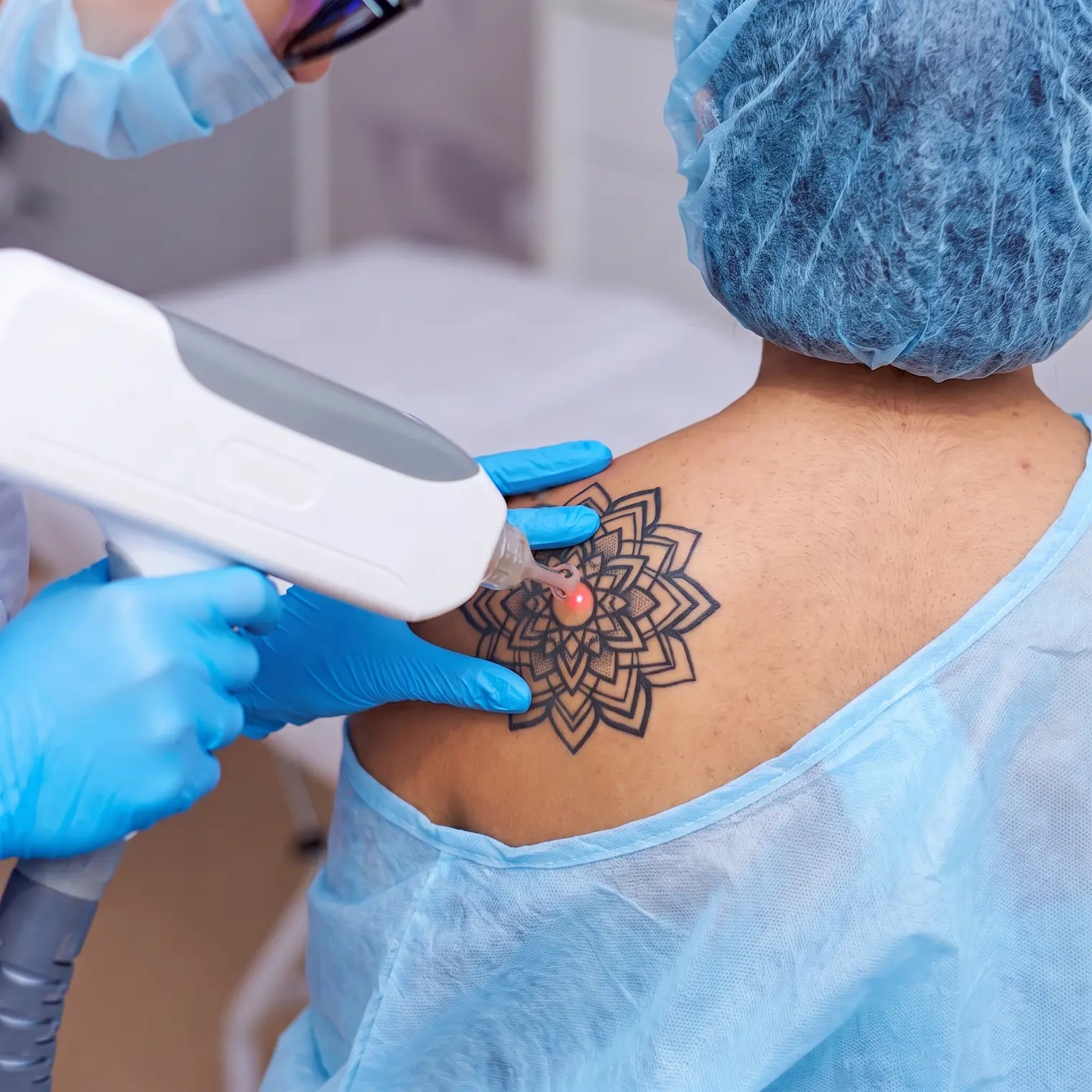
The core appeal of blackout is timeline. A full removal plan for a large or dense tattoo commonly runs six to ten or more sessions spaced weeks apart, stretching the total process out over close to a year or longer. A blackout tattoo, by contrast, is completed using standard tattooing sessions, which can wrap up in a fraction of that calendar time, sometimes in a single extended sitting for smaller areas.
The cost comparison often favors blackout upfront as well, since a tattooing project, even an extensive one, is frequently less expensive than a full multi-session laser removal course, particularly for larger areas where removal pricing scales up significantly with size and session count.
Blackout: Speed
Completed in one or a few tattooing sessions, versus many months for full laser removal.
Blackout: Upfront Cost
Often cheaper initially than a full removal course, especially for larger areas.
Removal: Flexibility
Keeps bare skin and future design options open once treatment is complete.
Removal: Reversibility
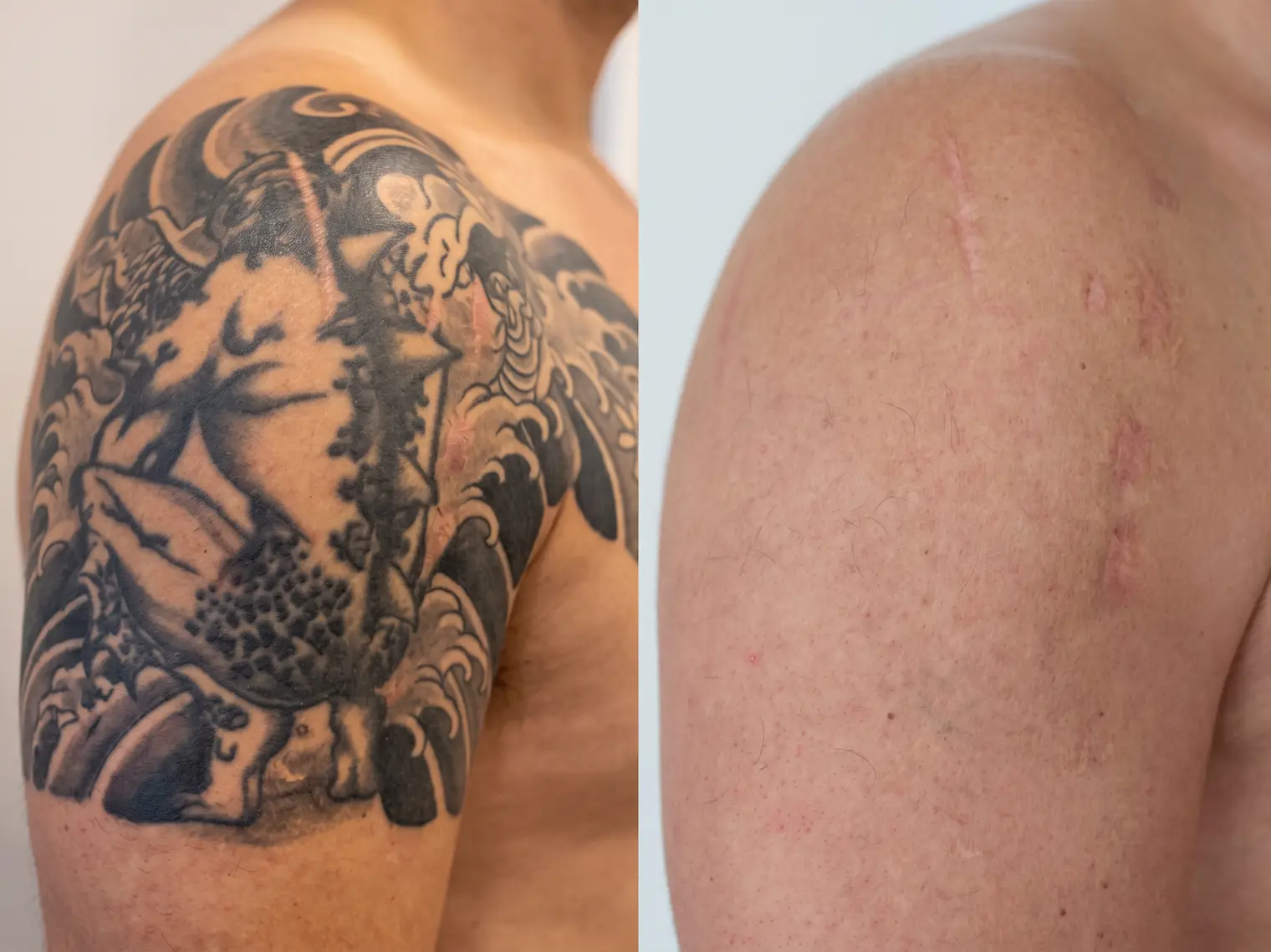
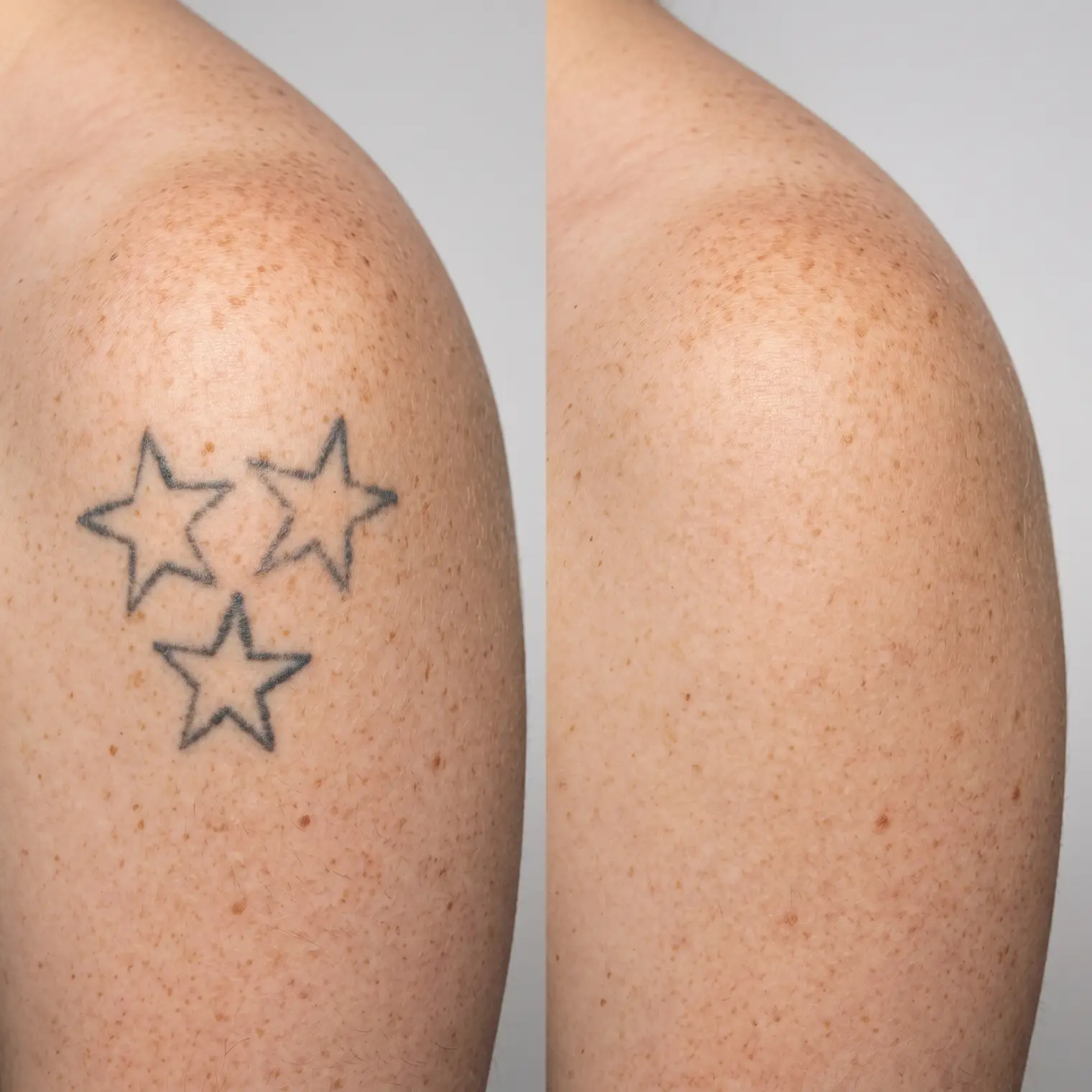
A cleared or lightened tattoo is a far easier future starting point than dense blackout ink.
What You're Actually Trading Away
A blackout tattoo is not a neutral or temporary fix; it is itself a new, permanent tattoo, just one made of solid black ink rather than a design. That means all the usual permanence of tattooing applies to it directly and completely. If your taste changes again in a few years, or you want bare skin in that area for any reason, personal or professional, you are back to needing removal, except now facing a considerably harder removal project than your original tattoo would have been.
Black ink is technically one of the easier colors for a laser to treat, since it absorbs a wide range of wavelengths effectively across nearly every laser system in use today. The real difficulty with removing a blackout tattoo is not the color, it is the sheer density and volume of ink packed into the area, which typically requires meaningfully more sessions than an average tattoo of the same size, sometimes twice as many or more, depending on how densely the original blackout work was done.
Myth
Since black is the easiest color for lasers to treat, blackout tattoos should be relatively simple to remove later.
Fact
Color is not the obstacle with blackout tattoos, ink volume is. The sheer density of ink used means significantly more sessions than a standard tattoo of the same size.
Myth
A blackout tattoo is basically a reset button, giving you the same flexibility as bare skin.
Fact
It is a new, permanent, dense tattoo. Future design options in that area become limited compared to skin that was actually cleared through removal.
Myth
Removal and blackout are interchangeable options for anyone who just wants an old tattoo gone.
Fact
They solve different problems. Removal aims for open skin over time; blackout trades a faster timeline for a new permanent commitment to solid black ink.
Weigh Your Real Options With a Real Consultation
Tell us about your tattoo, and we will point you to a Nashville clinic that can walk you through removal, fading, and cover-up honestly.
Thanks! We will match you with the right clinic shortly.
Who Tends to Prefer Each Path
Fully clear skin is what full removal is working toward.
Someone who is confident they want a bold, solid black aesthetic long-term, and is not concerned about limiting future design options in that specific area, may find blackout to be a satisfying, faster answer that fits their actual style preferences. It suits people drawn to the style itself as a genuine aesthetic choice, not only to the idea of covering something unwanted as quickly as possible.
Someone who wants genuine flexibility, including the real option of bare skin down the line, or who is not fully certain what they want to do with that area of skin long-term, is generally better served by removal or fading, even though it takes longer and costs more upfront over the full treatment course. It keeps more doors open for the future, which matters considerably more to some people than others depending on their personal circumstances.
A Middle Path: Fade First, Decide Later
You do not necessarily have to choose between full removal and blackout at the very start of this process. Our laser fading guide covers this in more depth: fading can lighten an old tattoo enough to give both a blackout artist and a colorful cover-up artist more room to work, without committing you to either direction before you are ready to decide. This staged approach lets you make a more informed decision about blackout versus a traditional cover-up once you can actually see how your skin responds to fading treatment.
Neither path is objectively correct. Blackout and full removal solve different problems for different people, and the right choice depends on how much you value speed and upfront cost against long-term flexibility. Being honest with yourself about which of those two things matters more in your specific situation is a better guide than simply picking whichever option sounds faster on the surface.
✓
Reviewed by a tattoo artist with over 10 years of industry experience, who regularly discusses blackout, fading, and full removal honestly with clients weighing their options.
Frequently Asked Questions
What is a blackout tattoo?
A blackout tattoo covers an area of skin with dense, solid black ink, often used to conceal an old tattoo or group of tattoos without removing them, in a single new tattooing project rather than a multi-month removal process.
Is a blackout tattoo actually faster and cheaper than removal?
Usually faster in calendar time and often cheaper upfront, since it is completed in one or a few tattooing sessions rather than the many months a full removal plan requires.
Can a blackout tattoo be removed later if I change my mind?
Yes, but it is considerably harder than removing a standard tattoo. Blackout tattoos use dense layers of ink, which typically require more laser sessions than average, and full removal can take significantly longer as a result.
Does black ink respond well to laser treatment?
Technically, yes. Black ink absorbs a wide range of laser wavelengths, making it one of the easier colors to treat. The challenge with blackout tattoos is not the color itself but the sheer volume and density of ink involved.
What are the main downsides of choosing a blackout tattoo over removal?
It is a permanent commitment to solid black ink covering that area, options for future designs in that spot become extremely limited, and if you later want it gone, removal becomes a longer and more expensive project than treating a standard tattoo.
Who tends to be a better candidate for a blackout tattoo versus removal?
Someone who is confident they want a bold, solid black aesthetic long-term, and is not concerned about limiting future design options in that area, may be a better fit for blackout. Someone who wants genuine flexibility, including the option of bare skin, is generally better served by removal.
Can I fade a tattoo with laser first and then decide between blackout and a colorful cover-up?
Yes. Laser fading before either a blackout or a colorful cover-up gives both you and your artist more options, since a lighter base is easier to work with regardless of which final direction you choose.