Salabrasion, acid peels, home laser pens, and removal creams all promise a cheap shortcut around the clinic. None of them are approved by the FDA, and most of them trade a tattoo you no longer want for skin damage you cannot undo.
11 min read·Last Updated: July 18, 2026
⚡ Quick Answer
No at-home tattoo removal method is approved by the FDA. Removal creams cannot reach the dermis where ink actually sits. Salabrasion, dermabrasion, and acid peels can cause severe burns, infection, and permanent scarring while rarely removing more than a small amount of surface pigment. Professional laser treatment remains the only method with real evidence behind it.
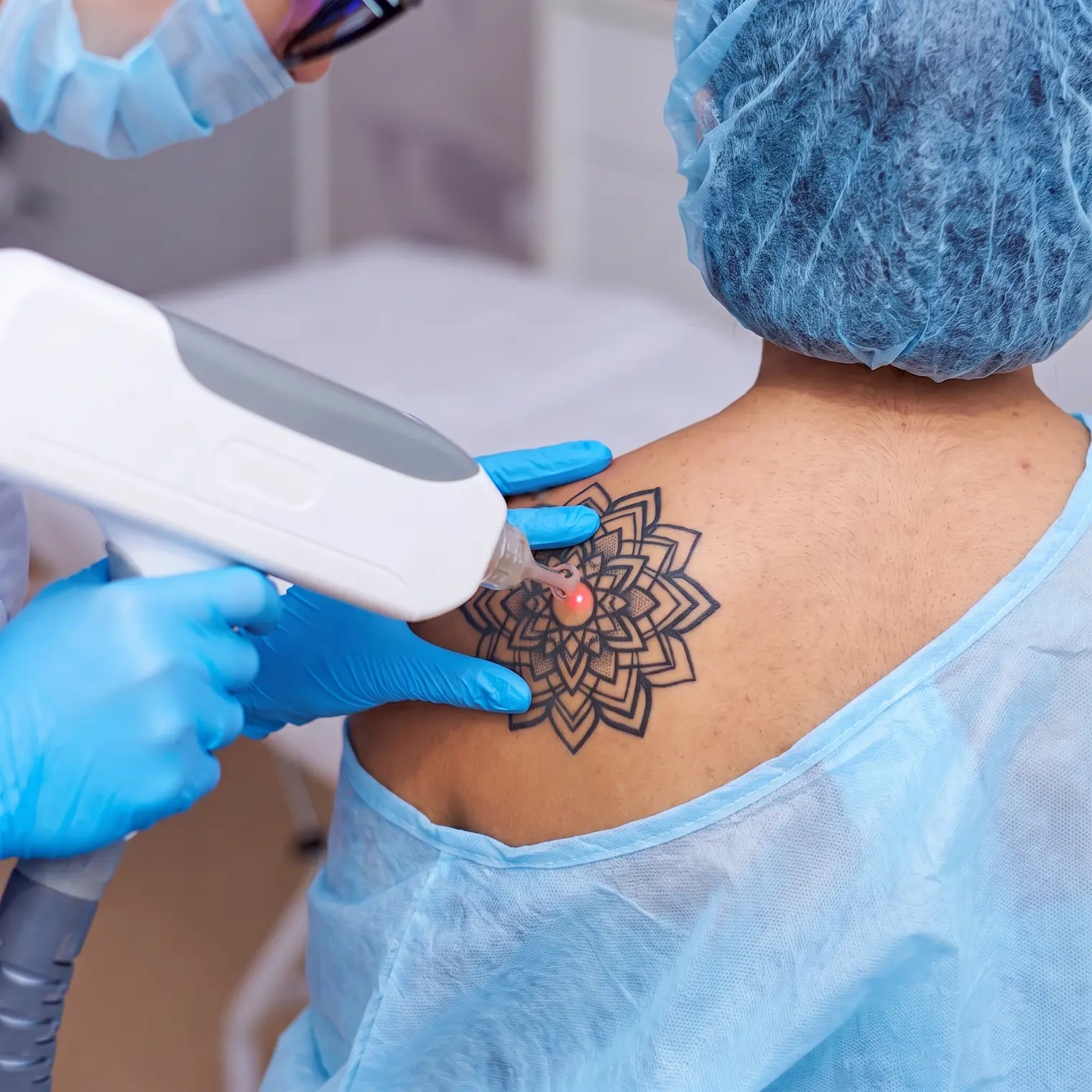
Professional equipment reaches ink that home methods physically cannot.
Searching for tattoo removal almost always turns up a second category of results alongside laser clinics: kits, creams, and videos promising to fade or fully remove a tattoo at home for a fraction of the price. The appeal is obvious. Laser removal is a multi-session process that unfolds over months, and a jar of cream or a bag of salt feels like it should be faster and cheaper.
It is not, and the reason comes down to basic anatomy. Tattoo ink sits in the dermis, the layer of skin beneath the surface. Reaching it safely requires either a controlled laser pulse precise enough to shatter ink particles without destroying the skin around them, or an amount of physical or chemical trauma to the skin that no home method can deliver without causing serious damage in the process.
This guide walks through the most commonly promoted DIY methods, what dermatologists and the FDA actually say about each one, and what to do if you have already tried one and are now dealing with the aftermath.
"Almost every self-inflicted scar we treat started with someone trying to save a few hundred dollars on a tattoo they could have safely faded with a laser instead."
A dermatology-adjacent removal clinic, on DIY method consultations
Skip the Risk. Talk to a Real Clinic First
Get matched with a Nashville clinic that offers an honest consultation before you try anything on your own.
Removal creams are the most widely sold DIY option, and the least likely to cause dramatic harm, which is part of why they persist. The FDA has not approved any tattoo removal cream, because none has demonstrated the safety and effectiveness required for approval. The core problem is depth: tattoo ink lives in the dermis, and topical creams, even ones containing active ingredients like salicylic or glycolic acid, only affect the outermost layer of skin, the epidermis.
At best, a cream regimen used for months may cause very mild, patchy lightening of the most superficial ink, along with a fair amount of skin irritation, peeling, and dryness along the way. It will not clear a tattoo, and it carries a real risk of permanent scarring or discoloration if used aggressively or for an extended period, especially on already sensitive skin.
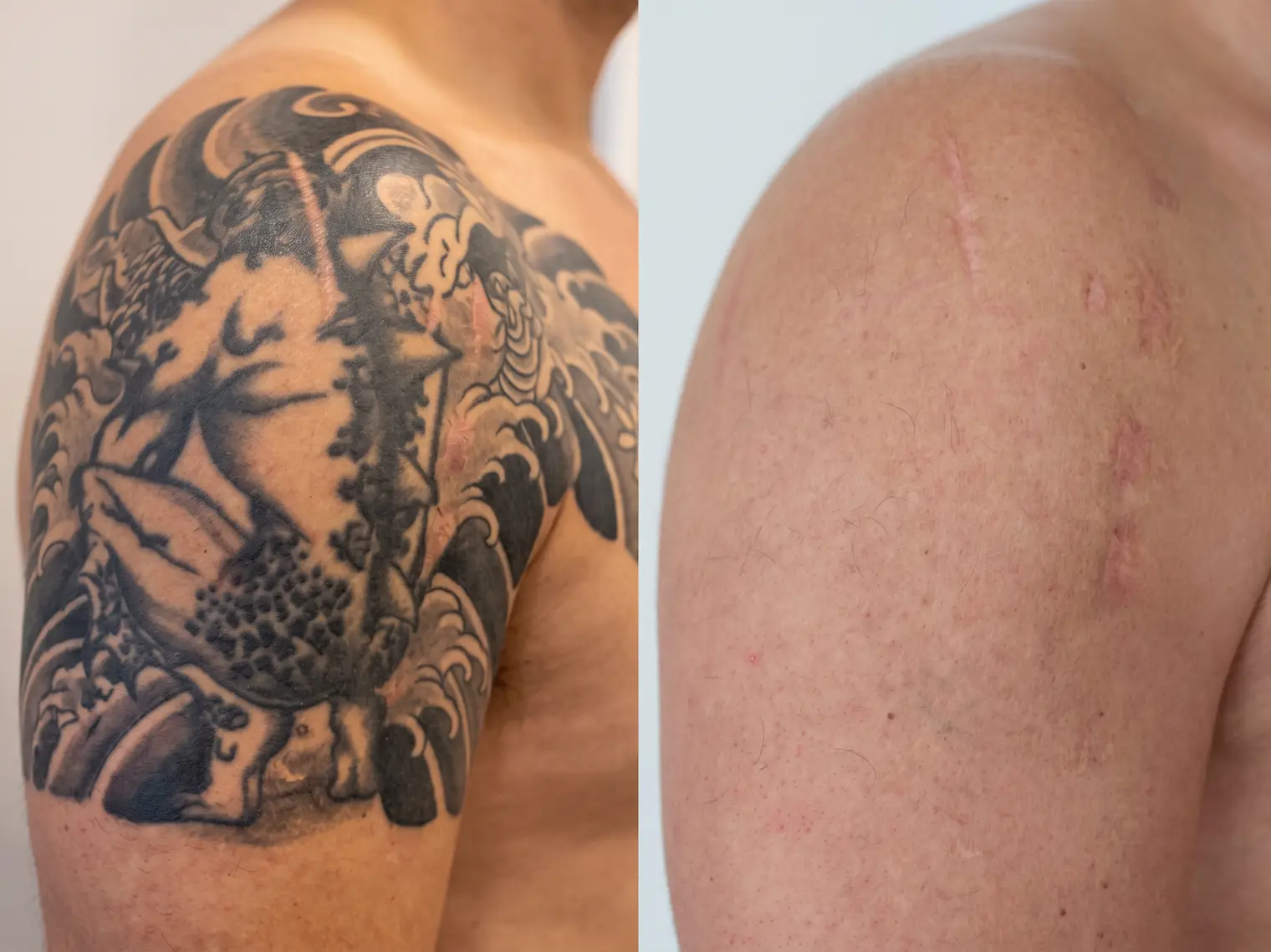
Real fading comes from controlled sessions, not abrasion at home.
Salabrasion involves scrubbing the tattooed area with coarse salt to physically abrade away the top layers of skin, in an attempt to remove the ink along with it. Dermabrasion is the same idea taken further, using a motorized abrasive tool instead of salt and pressure. Some online guides even suggest freezing the skin first with ice to numb it enough to tolerate the process.
Dermatologists describe both methods in strikingly consistent terms: extremely painful, a high risk of serious bacterial infection, and a strong likelihood of permanent scarring that ends up more visually noticeable than the tattoo it was meant to remove. Because these methods only reach the very top layers of skin, they are also largely ineffective on tattoos with any real depth or density, meaning the trade-off is frequently a scar in exchange for a tattoo that is still partially visible underneath it.
Myth
If salabrasion was good enough for dermatologists to use decades ago, it must still be a legitimate option today.
Fact
Some clinics historically used controlled versions of this technique under strict hygiene and anesthesia. Attempting it at home without that medical control is a fundamentally different, far riskier situation.
Myth
DIY laser pens sold online work the same way professional lasers do, just at a smaller scale.
Fact
These devices lack the precision, power, and safety systems of medical-grade lasers. They are not FDA-approved for removal and are widely considered ineffective on real tattoo ink while still carrying a genuine burn risk.
Myth
Lemon juice, vinegar, or other household acids can gradually bleach ink out of the skin like a stain.
Fact
Skin is living tissue, not fabric. Applying acid directly to it causes chemical burns, leading to blistering, peeling, and often permanent discoloration, without meaningfully affecting the ink underneath.
Trichloroacetic acid, commonly abbreviated TCA, is a real substance used in professional chemical peels, including some tattoo removal contexts. In a clinical setting, it is applied in a tightly controlled concentration, for a precisely timed duration, by someone trained to judge how deep the burn is going in real time.
DIY versions sold as "tattoo removal acid" or "removal peel" online do not come with that level of control, and the person applying them typically has no training to judge depth or timing. The result is frequently a severe chemical burn rather than a professional-grade peel, with a real risk of permanent scarring and skin discoloration that can be considerably harder to treat afterward than the original tattoo would have been.
Removal Creams
Not FDA-approved. Cannot reach the dermis. At best, mild patchy fading with a real risk of irritation and scarring.
Salabrasion / Dermabrasion
Extremely painful, high infection risk, and a strong likelihood of permanent, more visible scarring than the original tattoo.
DIY Laser Pens
Not approved for removal. Lack the precision and power of medical devices. Generally ineffective, with real burn risk.
Acid / TCA Peels
A real medical tool used only under controlled clinical conditions. At home, it commonly causes severe chemical burns.
None of this is about judgment. People consider DIY removal for understandable reasons: they want the tattoo gone faster than a multi-session laser plan allows, they are working with a limited budget, or they simply do not know that these methods have already been evaluated and found unsafe by dermatologists and the FDA. Marketing for these products is designed to look credible, often borrowing the visual language of professional skincare.
The honest comparison is this: professional laser removal has a defined cost, a defined session count, and an endpoint that a technician can show you progress toward. DIY methods have none of that structure, carry real risk of permanent damage, and in the cases where they do cause visible harm, the eventual cost of professional treatment to address both the original tattoo and the new skin damage is typically higher than starting with a real consultation would have been.
It also helps to remember that a consultation itself typically costs nothing. Most Nashville clinics will assess your tattoo, walk you through a realistic session count and price range, and answer questions about numbing and aftercare before you commit to anything. There is very little reason to gamble on an unregulated product or a video tutorial when the actual first step toward a safe removal plan is usually a free conversation away.
Get a Real Consultation Before You Try Anything Yourself
Tell us about your tattoo, and we will point you to a Nashville clinic that will give you an honest, safe assessment.
Thanks! We will match you with the right clinic shortly.
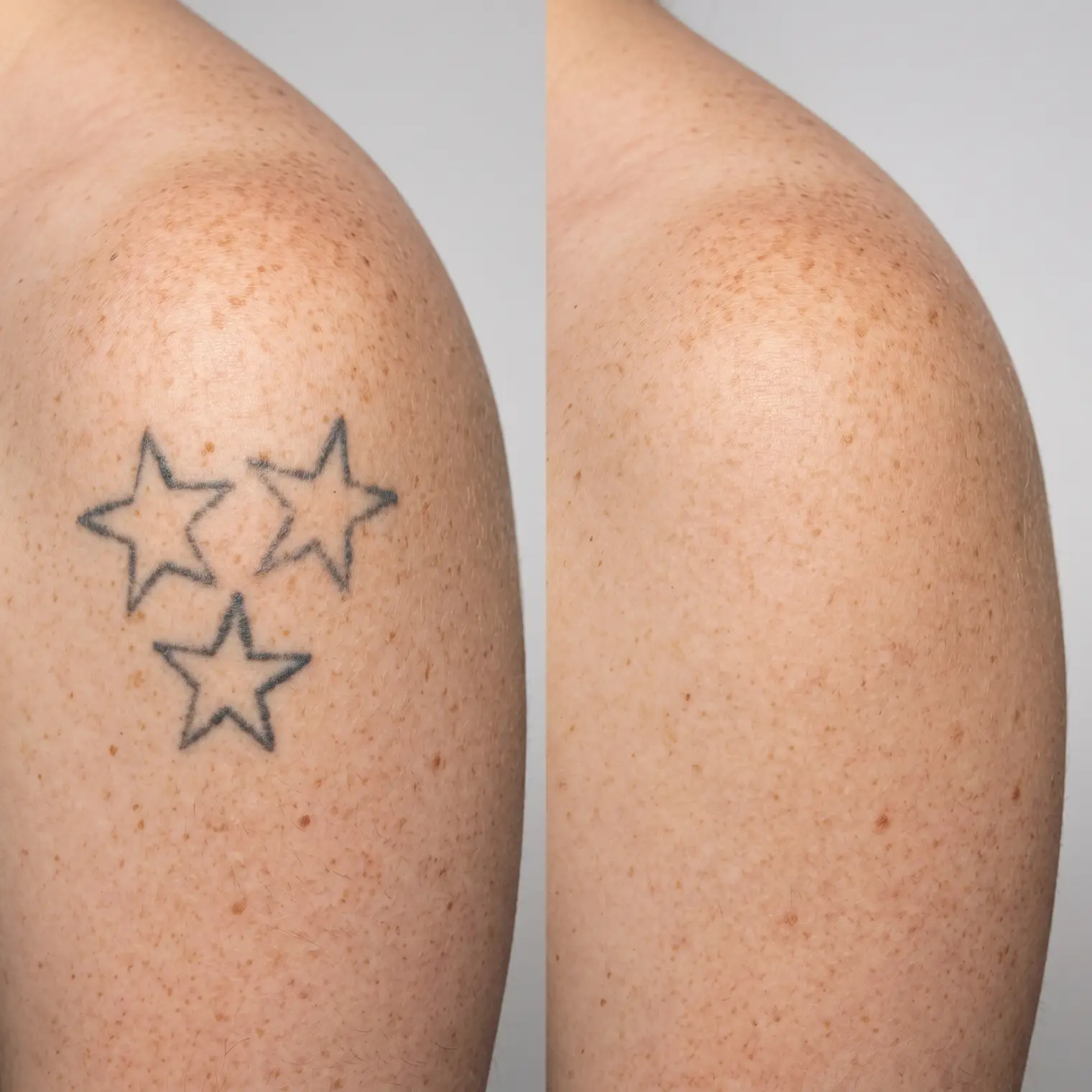
Professional treatment remains the reliable path to this result.
If you have already used a removal cream, attempted salabrasion, or applied an acid product at home and are noticing irritation, discoloration, or a wound that is not healing normally, the right next step is to see a dermatologist or a reputable removal clinic promptly, not to try another home remedy on top of it. Layering DIY methods on top of existing skin damage tends to make the eventual professional treatment more complicated, not less.
A qualified clinic can assess what has actually happened to the skin, treat any active irritation or infection risk first, and then advise honestly on what removal options are realistic once the skin has recovered. There is no benefit to waiting or trying to fix it yourself further; earlier evaluation generally means more options later. Bringing photos of the affected area from the days right after the DIY attempt, if you have them, can also help a clinic understand how the skin has changed since, which makes for a more accurate assessment than relying on how it looks weeks or months down the line.
✓
Reviewed by a tattoo artist with over 10 years of industry experience, who regularly fields questions from clients considering DIY fading before a cover-up and steers them toward a real consultation instead.
Is any tattoo removal cream approved by the FDA?
No. The FDA has not approved any tattoo removal cream or other at-home method, due to a lack of proven safety and effectiveness.
Can removal creams fade a tattoo at all?
At best, some creams may cause very mild, patchy fading of the outermost skin layer. They cannot reach the dermis, which is where tattoo ink actually sits, so they do not remove ink the way lasers do.
What is salabrasion and why do dermatologists warn against it?
Salabrasion involves scrubbing the skin with salt to abrade away the top layers in an attempt to remove ink with it. Dermatologists describe it as extremely painful, prone to serious infection, and highly likely to leave permanent scarring that is more noticeable than the original tattoo.
Are DIY laser pens sold online actually effective?
No. These devices lack the precision, power, and safety controls of professional laser equipment. They are not FDA-approved for tattoo removal and are widely considered ineffective on real ink while carrying a real risk of burns.
What happens if I use an acid peel like TCA at home?
Trichloroacetic acid and similar peels are used professionally only in tightly controlled concentrations. Applied at home without that control, they commonly cause chemical burns, blistering, and permanent discoloration rather than removing the tattoo.
I already tried a DIY method and my skin looks bad. What should I do?
See a dermatologist or a reputable removal clinic as soon as possible for an evaluation. Trying another home remedy on top of existing skin damage generally makes the situation harder, not easier, to treat professionally.
Is there any at-home method that dermatologists consider safe and effective?
Not currently. Professional laser tattoo removal remains the only method with meaningful clinical evidence behind it for safely reaching and breaking down ink in the dermis.
Why do people still try DIY tattoo removal despite the risks?
Cost and speed are the usual reasons. Laser removal is a multi-session process spread over months, and a cheap kit or home remedy can look like a shortcut, even though it does not actually shorten the path to a removed tattoo.