← Back to Removal Guide Hub
Tattoo Removal Guide · Nashville
Partial Removal: Fading Without Full Clearance
You do not always need to erase a tattoo completely. Strategic fading can soften, shrink, or prepare a tattoo for new work, often in a fraction of the time and cost of full removal.
9 min read
·
Last Updated: July 17, 2026
⚡ Quick Answer
Partial removal fades a tattoo without full clearance, typically needing only 2 to 5 sessions instead of 6 to 15+. It is commonly used to prepare for a cover-up, soften oversaturated ink, or reduce a tattoo's visibility without committing to the full removal timeline.
Before you go further, our guides on Cover-Up vs. Removal: Which Is Right for You and How Many Sessions You Actually Need cover the questions that usually come up next.
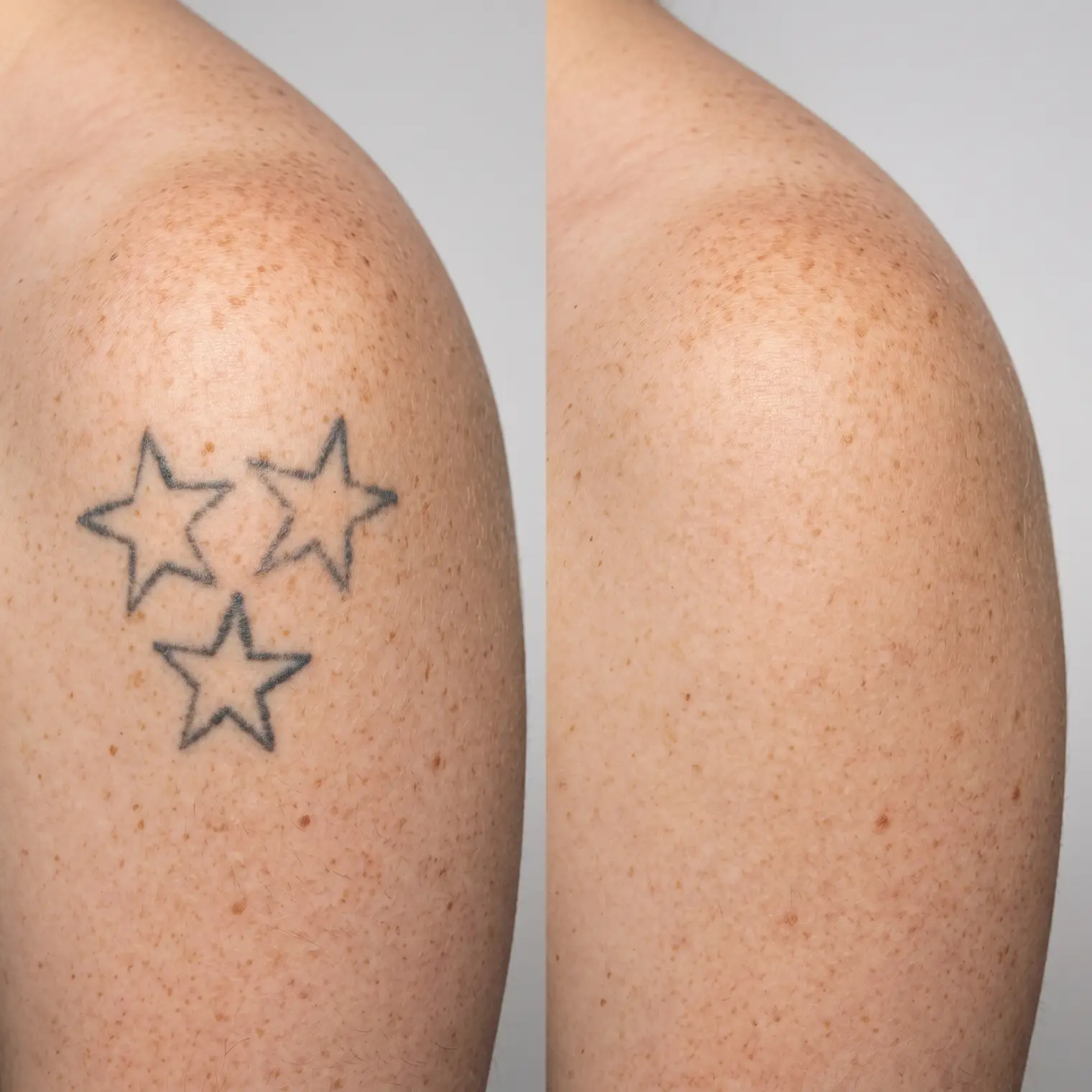
Not every removal goal is zero visible ink.
When people think about tattoo removal, they usually picture one outcome: completely blank skin. That is a real goal for a lot of clients, but it is not the only reason to book laser sessions. Partial removal, meaning targeted fading rather than full clearance, is its own strategy with its own set of benefits, and for a lot of people it turns out to be the better fit.
Partial removal comes up most often as preparation for a cover-up, but it also gets used to soften an oversaturated tattoo, shrink the visual footprint of a larger piece, or simply reduce a tattoo's visibility without committing to the full multi-year timeline covered in our session guide.
The confusion around partial removal usually comes from how removal itself gets marketed. Most clinic websites and consultations are built around the assumption that every client wants complete clearance, since that is the more straightforward service to describe and price. Clients who actually want something less than full clearance often do not realize that is even an option worth asking for, and end up either overpaying for more sessions than they need, or assuming removal is not for them at all when a shorter, cheaper partial plan would have worked.
"She was quoted close to full removal price for a sleeve she wanted covered anyway. We talked her into fading it first instead, and she saved almost three thousand dollars getting the same result she actually wanted."
A Nashville removal technician, on a client's sleeve piece
Get Our Recommended Nashville Clinics
Not sure if you need full removal or just fading? Get matched with a clinic that can tell you honestly.
Get My Recommendations →
That three-thousand-dollar gap is not unusual. Full removal is priced, and takes as many sessions, as it does because it is chasing every last particle of visible pigment. Partial removal stops well short of that finish line, which means fewer sessions, lower total cost, and a shorter timeline, all for a result that, depending on your goal, might serve you just as well as complete clearance.
The Four Most Common Reasons People Choose Partial Removal
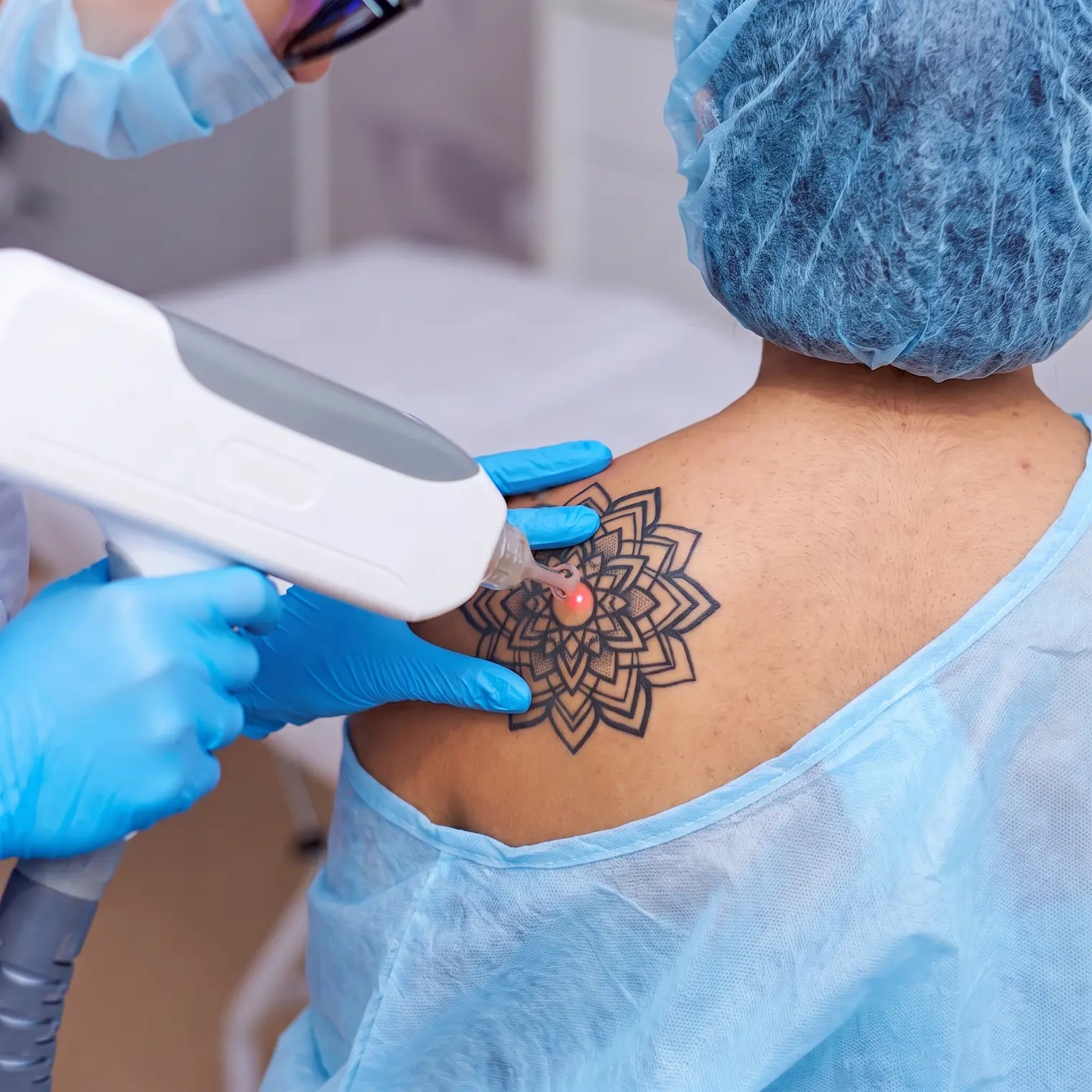
A targeted approach, not a race to zero.
Cover-up preparation is the most common reason, and it is well covered in our dedicated cover-up versus removal guide. But three other reasons come up often enough to be worth understanding on their own terms.
Softening an oversaturated tattoo helps when the original ink was applied too heavily or too deep, resulting in a blurred, muddy appearance that a few fading sessions can visibly sharpen, even without a cover-up planned. Shrinking a tattoo's visual footprint, sometimes called selective or spot removal, targets specific sections of a larger piece rather than the whole thing, useful when only part of a design needs to go. And simple visibility reduction, without any plan for a cover-up or further work, appeals to people who want a tattoo less noticeable in professional or social settings without the full timeline of complete removal.
A less common but still meaningful reason is preparing skin for an entirely different kind of new tattoo work, such as a piece that intentionally incorporates the ghost of the old design as a design element, sometimes called a blast-over or a tattoo that layers new linework directly onto lightly faded existing ink rather than fully obscuring it. This approach requires an artist experienced specifically in that technique, but it is worth knowing it exists as an option beyond a traditional full cover-up.
Cover-Up Prep
Fading just enough for a cover-up artist to design around, typically 2 to 5 sessions instead of 6 to 15 or more.
Softening Ink
Reducing oversaturation from heavy-handed original work, sharpening a blurred or muddy-looking tattoo.
Spot Removal
Targeting a specific section of a larger piece, like a name or a single element, without touching the rest.
Visibility Reduction
Lightening a tattoo enough to be less noticeable day-to-day, without committing to full clearance.
Lower Total Cost
Fewer sessions means meaningfully lower spend. See our cost guide for realistic per-session pricing.
Shorter Timeline
A partial fading plan can wrap up in a matter of months rather than the year or more full removal often takes.
How to Communicate a Partial Goal Clearly
The biggest risk with partial removal is not technical, it is communication. A technician who is not told your goal is fading, not full clearance, may default to treating your tattoo the same way they would for a client aiming at complete removal, which can mean more sessions and more cost than your actual goal requires.
Be specific at your consultation. If you are fading for a cover-up, bring reference images of the new design so the technician can gauge how much fading that particular artwork will realistically need. If your goal is simply softening or shrinking, say so directly and ask the technician to build a plan around that endpoint rather than assuming you want the tattoo fully gone.
What Results to Realistically Expect
Partial removal does not produce the same visual outcome as full clearance, and understanding that difference upfront helps avoid disappointment. Expect visible lightening and reduced density rather than the tattoo disappearing entirely. Fine details and thin linework tend to fade faster and more completely than dense, saturated fills, which means a partially faded tattoo often keeps a soft outline or shadow of the original design even after several sessions.
This partial ghosting is actually useful information for cover-up planning specifically, since it tells your artist roughly how much visual interference they will still be designing around. A tattoo faded from solid black to a soft grey shadow gives an artist considerably more freedom than one that has not been touched at all, even though neither is technically at zero visible ink.
If your goal is simply reducing visibility without a cover-up plan, ask your technician for a realistic before-and-after expectation based on similar cases they have treated, rather than assuming a handful of sessions will get you anywhere close to the same result as someone pursuing full clearance over a year or more.
The Real Savings, in Numbers
Using the pricing ranges from our cost guide, the difference between partial and full removal is not subtle. A medium-sized tattoo needing 7 to 10 sessions for full clearance might only need 3 to 4 sessions of fading for cover-up prep, at a similar per-session rate. On a typical Nashville per-session price of $150 to $220, that can mean a difference of $600 to $1,300 or more, on top of finishing months earlier.
For larger pieces, the gap widens further. A sleeve or back piece that might run 11 to 15+ sessions for complete removal could realistically need 4 to 6 sessions of targeted fading before a cover-up artist has enough to work with, which is the kind of difference that turned a nearly five-thousand-dollar removal plan into a much more manageable one for the client mentioned earlier in this guide.
None of this means partial removal is automatically the right call. If your goal is a tattoo-free area with no plans for new work, full removal is still the correct path, even though it costs more and takes longer. The savings only apply when your actual goal, whether that is a cover-up, softening, or reduced visibility, does not require complete clearance to begin with.
Myths That Push People Toward Unnecessary Sessions
Myth
Partial removal is just removal that stopped too early, not a real strategy.
Fact
Partial removal is a deliberate, planned endpoint, not an abandoned treatment. Many clients complete their partial plan and stop by design, exactly as intended.
Myth
Once you start removal sessions, you have to see it through to full clearance.
Fact
You can stop, adjust your goal, or shift from partial to full removal (or the reverse) at any point, in consultation with your technician.
Myth
A faded tattoo left as-is, with no cover-up, always looks worse than the original.
Fact
Fading is generally gradual and even when done properly, and plenty of clients are satisfied stopping at a lightened, less visible version of their original tattoo.
Not Sure Which Nashville Clinic Is Worth Your Money?
Tell us your goal, full removal or just fading, and we will point you to a clinic that will plan around it correctly.
Thanks! We will match you with the right clinic shortly.
✓
Reviewed by a tattoo artist with over 10 years of industry experience, who has watched laser removal technology and technique improve dramatically over the past decade and regularly advises clients on full removal versus partial fading for a cover-up.
Frequently Asked Questions
How many sessions does partial removal usually take?
Typically 2 to 5 sessions for cover-up prep or moderate softening, compared to 6 to 15 or more for full clearance, though your exact number depends on the tattoo and your goal.
Can I decide to go from partial to full removal later?
Yes. Since you have not committed to a full-clearance treatment plan, you can continue toward complete removal at any point if you change your mind.
Does partial removal cost less per session too, not just fewer sessions?
Per-session pricing is usually similar to full removal at the same clinic. The savings come from needing fewer total sessions, not a lower rate.
Will a partially faded tattoo look patchy or uneven?
When done by an experienced technician with a clear goal in mind, fading is generally even. Uneven results are more common when a plan was not clearly communicated upfront.
Should I tell my cover-up artist before or after starting fading sessions?
Before, ideally. Their input on how much fading their design needs should shape your removal plan from the start, rather than fading first and hoping it turns out to be enough once you sit down for the actual cover-up consultation.
Can partial removal target just a name or word within a larger tattoo?
Yes, this is one of the most common uses of spot removal, targeting a specific section like text or a small element without touching the surrounding artwork.
Does partial removal work differently on darker skin tones?
The same skin tone precautions that apply to full removal apply here too. A technician should adjust laser settings to reduce pigment risk regardless of whether the goal is partial or complete fading.
Does partial removal work well on tattoos located on the hands or feet?
It can, though these areas tend to have slower lymphatic clearance and more sensitive skin, so sessions may be spaced slightly differently than for a similar tattoo on the arm or leg.
Ready to Talk to Someone Who Understands Partial Goals?
Get matched with a Nashville clinic that plans around your actual goal, not a default full-clearance timeline.
Find a Trusted Removal Clinic