← Back to Removal Guide Hub
Tattoo Removal Guide · Nashville
Signs Your Removal Is Actually Working
Progress rarely looks dramatic session to session. Here is what real fading actually looks like, and how to tell it apart from ordinary healing or a plan that needs adjusting.
10 min read
·
Last Updated: July 18, 2026
⚡ Quick Answer
Real progress shows up as gradual color lightening, softer edges, and reduced ink density between sessions, becoming clearer as the four to eight week healing window between treatments passes. Frosting during the session itself is a positive sign the laser is reaching the ink. Uneven or patchy fading is normal along the way. If several sessions in a row show no visible change, it is worth discussing your plan with your technician.
Before you go further, our guides on Day-by-Day Aftercare Guide and How Many Sessions You Actually Need cover the questions that usually come up next.
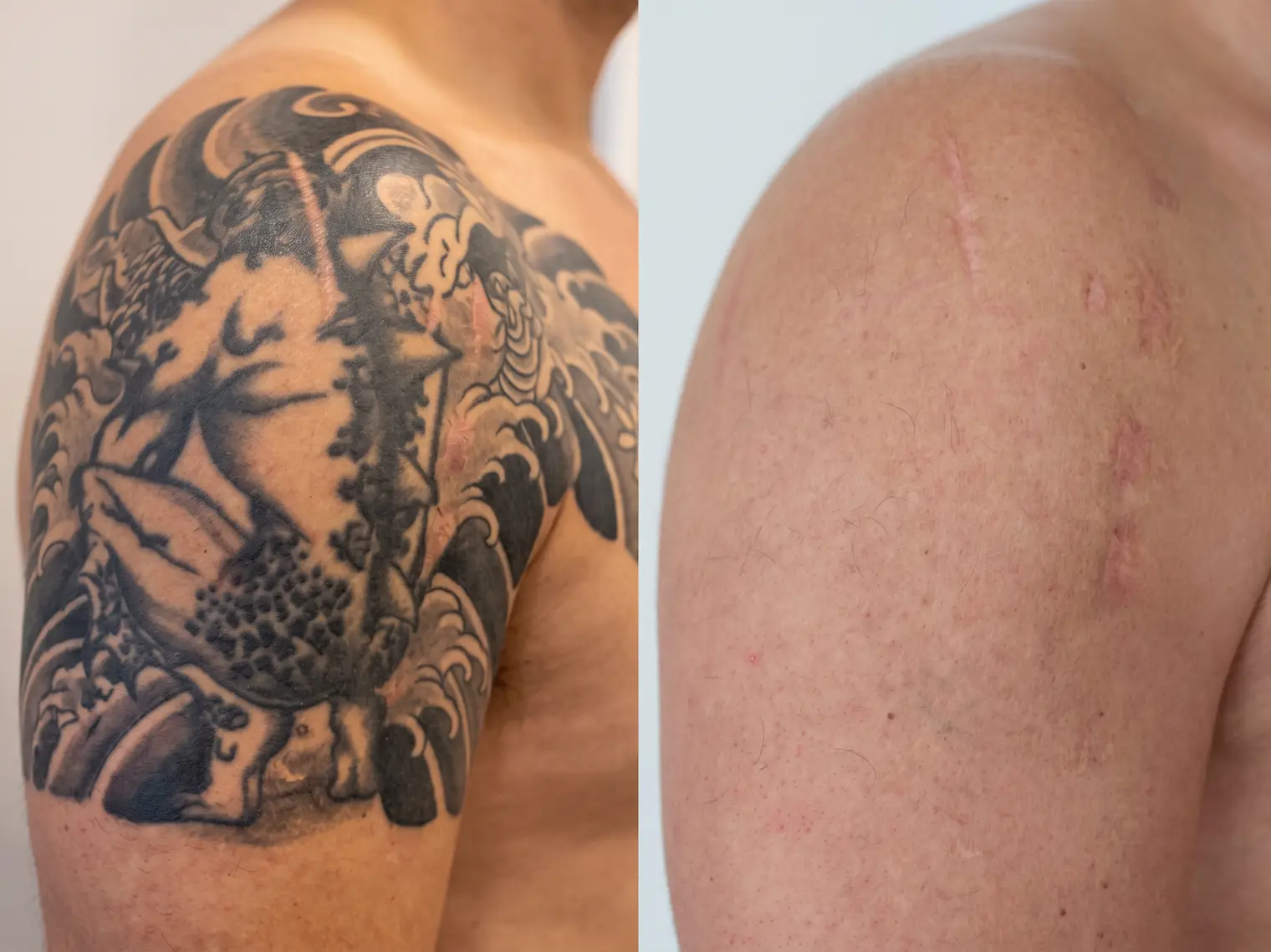
Real progress is usually gradual, not dramatic, session to session.
A common source of frustration partway through a removal plan is uncertainty about whether it is actually working. Unlike getting a tattoo, where the result is visible the moment you leave the chair, removal unfolds gradually over many months, and the changes between any two individual sessions can be subtle enough that it is easy to wonder if anything is happening at all.
The truth is that meaningful fading is almost always happening, just more slowly and less dramatically than most people expect walking in. This guide breaks down the actual signs of progress worth watching for, what is normal along the way, and when a lack of visible change is worth raising with your technician rather than just waiting it out patiently on your own.
"Clients almost never notice their own progress in the room. It is usually the photo comparison a few sessions in that finally convinces them it is working."
Common feedback echoed across Nashville removal clinics
Not Sure If Your Current Plan Is on Track?
Get matched with a Nashville clinic that will give your progress an honest, expert look.
Get My Recommendations →
Frosting: What It Means During the Session
Right as the laser passes over the tattoo, the treated skin often turns a chalky white color known as frosting. This effect comes from the release of carbon dioxide as the laser shatters ink particles beneath the surface, and it typically fades within 15 to 30 minutes after treatment. Frosting is generally considered a positive sign that the laser is effectively reaching and breaking down the ink, though its absence in a given spot does not necessarily mean nothing happened there either.
What Real Fading Looks Like Between Sessions
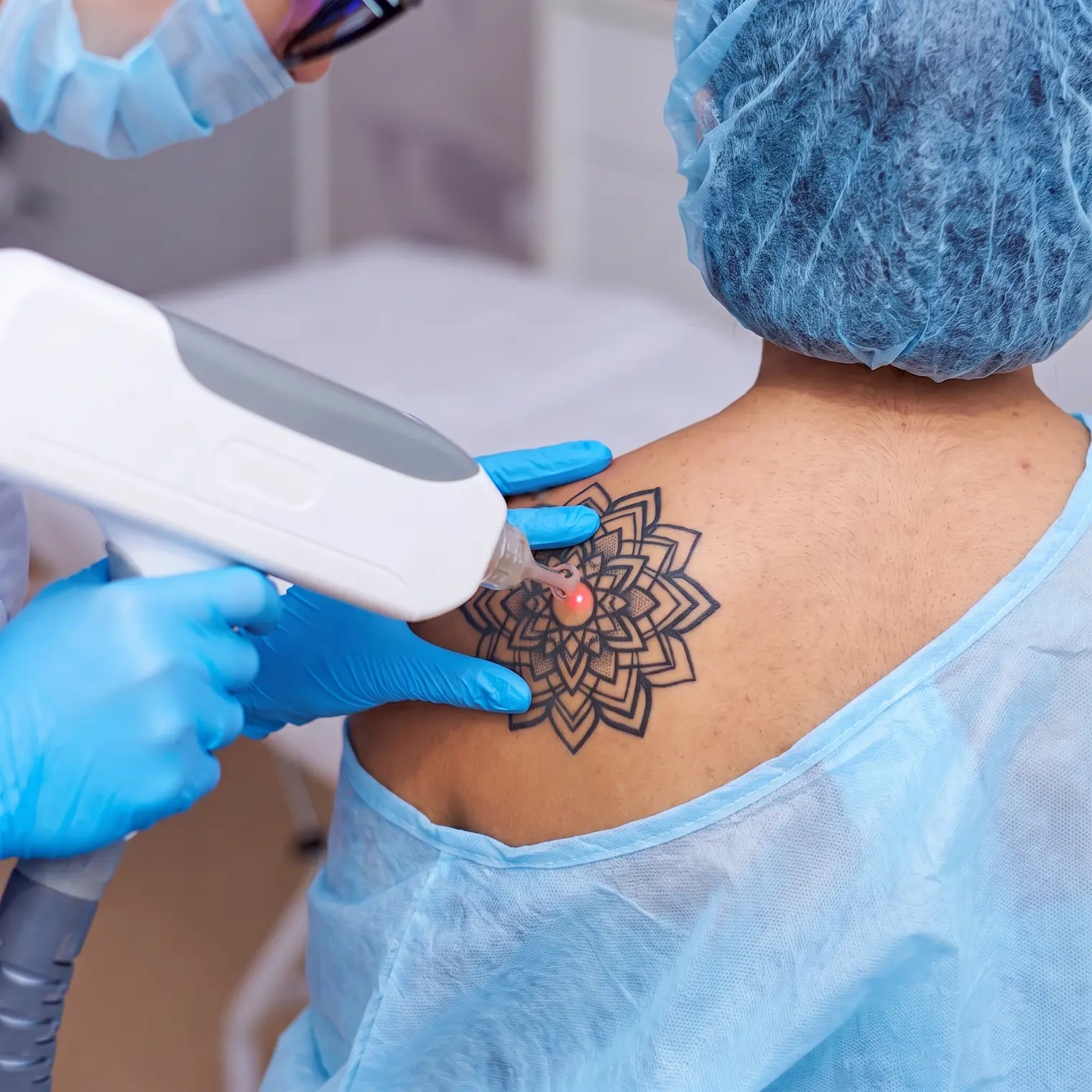
The clearest progress often shows up in photo comparisons, not memory.
The most reliable signs of progress show up gradually over the weeks between sessions, as your body's immune system clears out the ink particles the laser broke apart. Bright, saturated colors typically soften first: vivid reds fade toward soft pink, deep black often shifts toward a lighter gray before continuing to lighten further with subsequent sessions.
Edges tend to soften too. Lines that were once crisp and well-defined often develop a slightly blurred or "ghosted" quality as the ink beneath them thins out, which is generally a good sign rather than something to be concerned about. Some clients also notice a subtle change in skin texture over the treated area as the process continues, though this is less consistent than the color and edge changes.
Color Lightening
Vivid colors softening toward lighter, more muted tones is one of the clearest signs of real progress.
Softer Edges
Previously crisp linework starting to look slightly blurred or "ghosted" reflects thinning ink beneath the surface.
Frosting During Treatment
The chalky white effect during a session is a positive sign the laser is reaching the ink effectively.
Uneven Fading
Patchy progress across different parts of the same tattoo is normal, and generally evens out over more sessions.
Photo Comparisons
Progress is often clearer in side-by-side photos taken in consistent lighting than it feels day to day.
Slower Later Sessions
Fading naturally slows as a tattoo gets lighter overall; this is expected, not a sign something has stopped working.
Why Fading Isn't Always Even
It is completely normal for a tattoo to fade unevenly across sessions. Different parts of the same design often have different ink densities, depths, and colors, all of which respond to laser treatment at different rates. A solidly shaded section may lighten more slowly at first than fine linework nearby, or a section done in one ink batch may respond differently than another, even within the same tattoo.
Color plays a particularly large role here. Black ink generally responds fastest and most predictably to laser treatment. Lighter or more unusual colors like pale blue, green, and white are typically more stubborn, sometimes requiring more sessions or a different laser wavelength entirely to clear effectively. If your tattoo has a mix of colors, expect the black elements to visibly lead the fading process while other colors catch up more gradually. A technician who explains this color-by-color breakdown before your plan begins is generally setting more realistic expectations than one who gives a single blanket timeline for the whole design.
Myth
If my tattoo looks darker right after a session, the treatment made it worse.
Fact
This can be oxidation, a reaction between metals in certain inks and oxygen once the laser breaks the ink apart. It is usually temporary and often fades with subsequent sessions.
Myth
Every session should produce a visibly obvious difference from the last one.
Fact
Progress is typically gradual and easier to see across several sessions or in side-by-side photos than between any two individual visits.
Myth
Slower fading in later sessions means the treatment has stopped working.
Fact
As a tattoo gets lighter overall, there is simply less ink left to clear, which naturally makes further changes look smaller even when the process is still working normally.
Want an Honest Read on Your Progress?
Tell us about your tattoo and current treatment, and we will point you to a Nashville clinic that can assess it properly.
Thanks! We will match you with the right clinic shortly.
A Rough Sense of Timeline
These are general patterns clients commonly report, not a guarantee for any specific tattoo, since ink density, color, and individual healing all affect the actual real-world pace of your own removal plan.
Sessions 1-2
Setup Phase
Frosting response established, first subtle softening
Sessions 3-5
Visible Fading
Most clients report noticeable color and edge changes
Sessions 6+
Steady Progress
Slower, more gradual change as less ink remains
When Lack of Progress Is Worth Raising
Most treatment plans show at least some visible fading within the first three to five sessions, though the exact pace depends heavily on your tattoo's size, ink density, and colors. If several sessions in a row pass with no visible change at all, rather than just a slower pace than you hoped for, that is worth a direct conversation with your technician. This distinction, between slower-than-expected and stalled, matters, since the first is common and the second is the one that actually warrants a change of approach.
A stalled plan does not necessarily mean something has gone wrong; it may simply mean the laser wavelength or settings being used need adjusting for your specific ink, or that a different technology like a picosecond laser could work better for stubborn colors than the equipment currently being used. A good clinic will take that conversation seriously and adjust rather than simply repeating the same approach and hoping for a different result. Bringing your photo log to that conversation gives your technician something concrete to evaluate, rather than relying on a general sense that things feel slower than expected.
Tracking Progress the Right Way
Because changes between individual sessions can be subtle, and swelling or redness right after a treatment can make the area look temporarily different in ways unrelated to actual fading, photos are a far more reliable way to track real progress than memory alone. Taking a photo in similar, consistent lighting before each session, ideally with the skin fully healed from the previous one rather than still inflamed, gives you and your technician an honest basis for comparison over time.
Looking back at your very first photo next to your most recent one, rather than only comparing consecutive sessions, is often the moment progress becomes obvious even when it did not feel that way session to session along the way. Many clinics keep this documentation for you as part of your file, so it is worth asking whether yours does, or starting your own simple photo log from session one if you have not already.
✓
Reviewed by a tattoo artist with over 10 years of industry experience, who regularly walks clients through photo comparisons to show them progress they had not noticed in the moment.
Frequently Asked Questions
What is frosting and does it mean the session worked?
Frosting is the chalky white appearance that shows up on treated skin during a session, caused by the release of carbon dioxide as the laser breaks down ink particles. It is a normal and generally positive sign that the laser is reaching the ink, and it typically fades within 15 to 30 minutes.
How soon should I expect to see real fading?
Visible fading between sessions is often gradual rather than dramatic, and it typically becomes clearer over the four to eight week healing window between treatments, as your body clears the broken-down ink particles.
Why does my tattoo look darker right after a session?
This can happen due to oxidation, when metals present in certain inks, particularly white or light colors mixed with metallic compounds, react with oxygen after the laser breaks them apart. It is usually temporary and often fades with subsequent sessions.
What does it mean if fading has clearly slowed down or stopped?
Some ink colors and densities respond more slowly than others, and progress naturally slows as a tattoo gets lighter overall. If several sessions in a row show no visible change at all, it is worth discussing with your technician, since laser settings or technology may need adjusting.
Do all tattoo colors fade at the same rate?
No. Black ink generally responds fastest to laser treatment, while colors like light blue, green, and white are often more stubborn and may require more sessions or a different laser wavelength to clear effectively.
Is patchy or uneven fading normal during the process?
Yes. Tattoos frequently fade unevenly across sessions, since ink density, depth, and color vary across different parts of the same design. This generally evens out as treatment continues.
How many sessions before I can expect to see a real difference?
Many clients report noticeable fading within three to five sessions, though full clearance for larger or denser tattoos can take considerably longer. Your technician can give a more specific estimate based on your tattoo's size, ink density, and colors.
Should I take photos to track my progress?
Yes. Photographing the area in consistent lighting before each session gives you and your technician a much clearer way to compare real progress than memory alone, especially since day-to-day changes from swelling or redness can make fading harder to judge in the moment.
Want a Second Opinion on Your Progress?
Get matched with a Nashville clinic that can assess your treatment plan honestly and adjust it if needed.
Find a Trusted Removal Clinic