You do not have to choose between a fresh design and getting rid of old ink completely. Here is how the two options actually compare, and why the smartest plan often combines both.
10 min read·Last Updated: July 17, 2026
⚡ Quick Answer
A cover-up requires only 2 to 5 sessions of fading rather than full removal's 6 to 15+, making it faster and cheaper if you still want tattooed skin in that spot. Choose full removal instead if you want the area completely clear with no new tattoo planned.
Most people who are unhappy with an old tattoo assume they only have two choices: live with it, or go through the long process of removing it completely before they can consider anything new. That framing skips the option most Nashville artists and removal specialists would actually recommend for a lot of situations, which is fading the old tattoo enough for a skilled cover-up artist to work with it directly.
The right answer depends on your specific tattoo, your design goals, and honestly, your patience. There is no universal correct choice here, only a set of trade-offs worth understanding before you commit months or years to one path.
"He spent fourteen months on a removal plan he didn't need. If someone had told him on day one that a cover-up was realistic with just a bit of fading, he could have had new work months earlier."
A Nashville tattoo artist, on a client's forearm piece
Get Our Recommended Nashville Clinics
Not sure if you need full removal or just fading? Get matched with a clinic that can tell you honestly.
That fourteen-month story is more common than it should be, mostly because the two paths, full removal and cover-up, get marketed as completely separate services by completely separate businesses. A removal clinic sells removal. A tattoo shop sells new tattoos. Neither one is necessarily going to bring up the option that combines both, even when it is the faster and cheaper route to the result the client actually wants.
This gap in communication is not anyone's fault exactly. Removal clinics and tattoo shops are usually separate businesses with separate specialties, and most clients only think to ask one side of the equation, then commit to a plan based on incomplete information. The fix is simple once you know to do it: talk to both sides before choosing a direction, not after you have already booked several sessions down one path.
What a Cover-Up Artist Actually Needs
Partial fading, not full clearance, is often the goal.
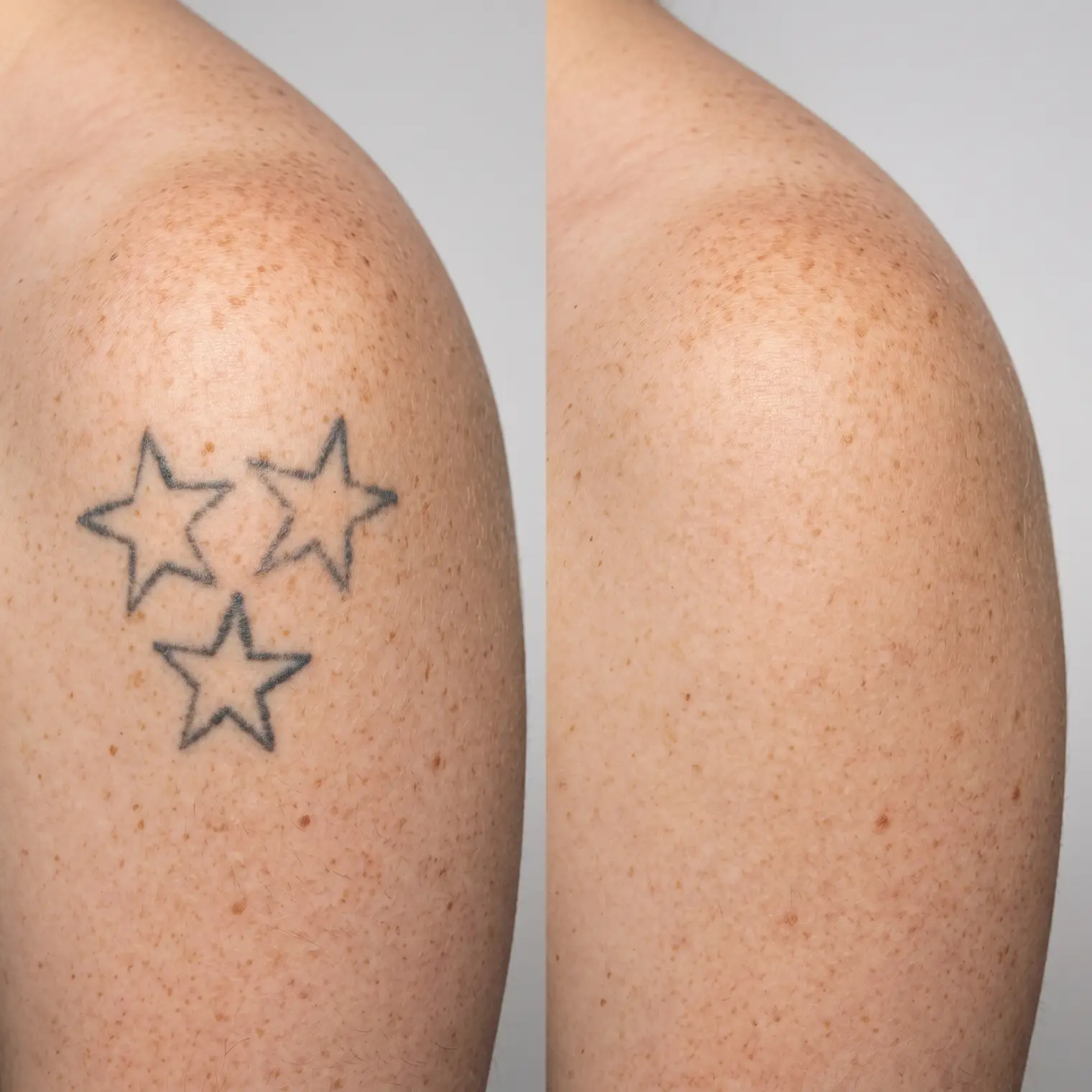
A skilled cover-up artist does not need a blank canvas. What they need is reduced visual interference from the old design, meaning the original lines and shading are faded enough that new artwork can sit on top without the old tattoo showing through in the wrong places. That is a fundamentally different, and usually much shorter, process than removing a tattoo completely.
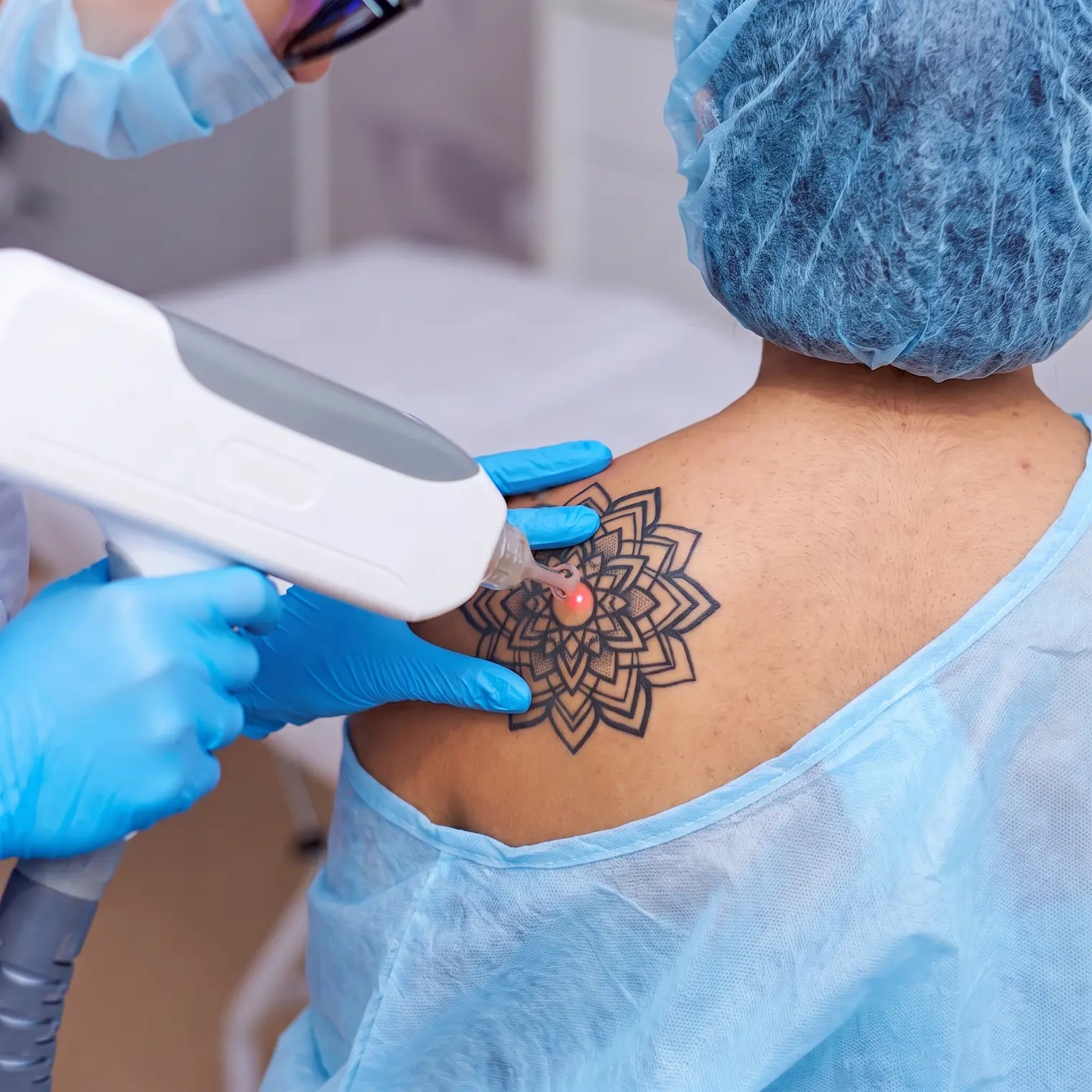
Full removal aims to eliminate visible pigment as completely as possible, which can take the 6 to 15+ sessions we cover in our session guide. Fading for a cover-up typically needs somewhere between 2 and 5 sessions, since the target is not zero visible ink, just enough reduction that a good artist has real freedom with linework, color, and placement.
Choose Removal If...
You do not want any tattoo in that spot going forward
The area is visible in contexts where you need it fully clear (career, uniform, etc.)
You have time and budget for the full multi-year timeline
The tattoo is small enough that full removal is realistically fast
Choose Cover-Up (With Fading) If...
You still want tattooed skin in that spot, just a different design
You want the fastest path to a result you are happy with
Your current tattoo has dark, dense areas a skilled artist can design around
Budget is a real factor and fewer total sessions matters
The Combo Most People Don't Know About
The strongest option for a lot of clients is not choosing one path exclusively, it is doing a few rounds of partial removal specifically to fade the old tattoo, then handing it off to a cover-up artist once it has faded enough. This gets you a fresh-feeling piece of art without the full removal timeline, and it typically costs less than either full removal or fighting a stubborn old tattoo through a cover-up with no fading at all.
The tricky part is coordination. Not every removal clinic thinks in terms of "faded enough for a cover-up" rather than "fully cleared," and not every tattoo artist is comfortable estimating how much fading their design will need before they see the skin in person. The best results tend to come from clients who talk to both sides early, ideally bringing reference art to the removal consultation so the technician knows exactly what target they are fading toward.
Myths That Waste Time and Money
Myth
You need full removal before any cover-up artist will touch the area.
Fact
Most experienced cover-up artists prefer some fading over none, but rarely require complete clearance. Ask the specific artist what level of fading they need for your design idea.
Myth
Dark tattoos can never be covered, only removed.
Fact
Dense black work is harder to cover without fading, but a few sessions of laser treatment combined with a design built around dark, saturated new ink can work even over stubborn old tattoos.
Myth
Fading for a cover-up is basically the same cost as full removal.
Fact
Because it typically needs far fewer sessions, fading for a cover-up usually costs a fraction of full removal. See our cost guide for realistic per-session pricing.
How to Make the Right Call for Your Tattoo
Start with a consultation with a cover-up artist before you book any removal sessions, not after. Bring photos of design directions you are drawn to. A good artist will tell you honestly whether your current tattoo, as is, already gives them enough to work with, or whether some fading would open up meaningfully better options.
If fading is recommended, ask the artist to describe roughly how much and where, then bring that information to a removal consultation so the technician can build a treatment plan around the actual goal instead of defaulting to full clearance, which may cost you months of unnecessary sessions.
Finding the Right Cover-Up Artist
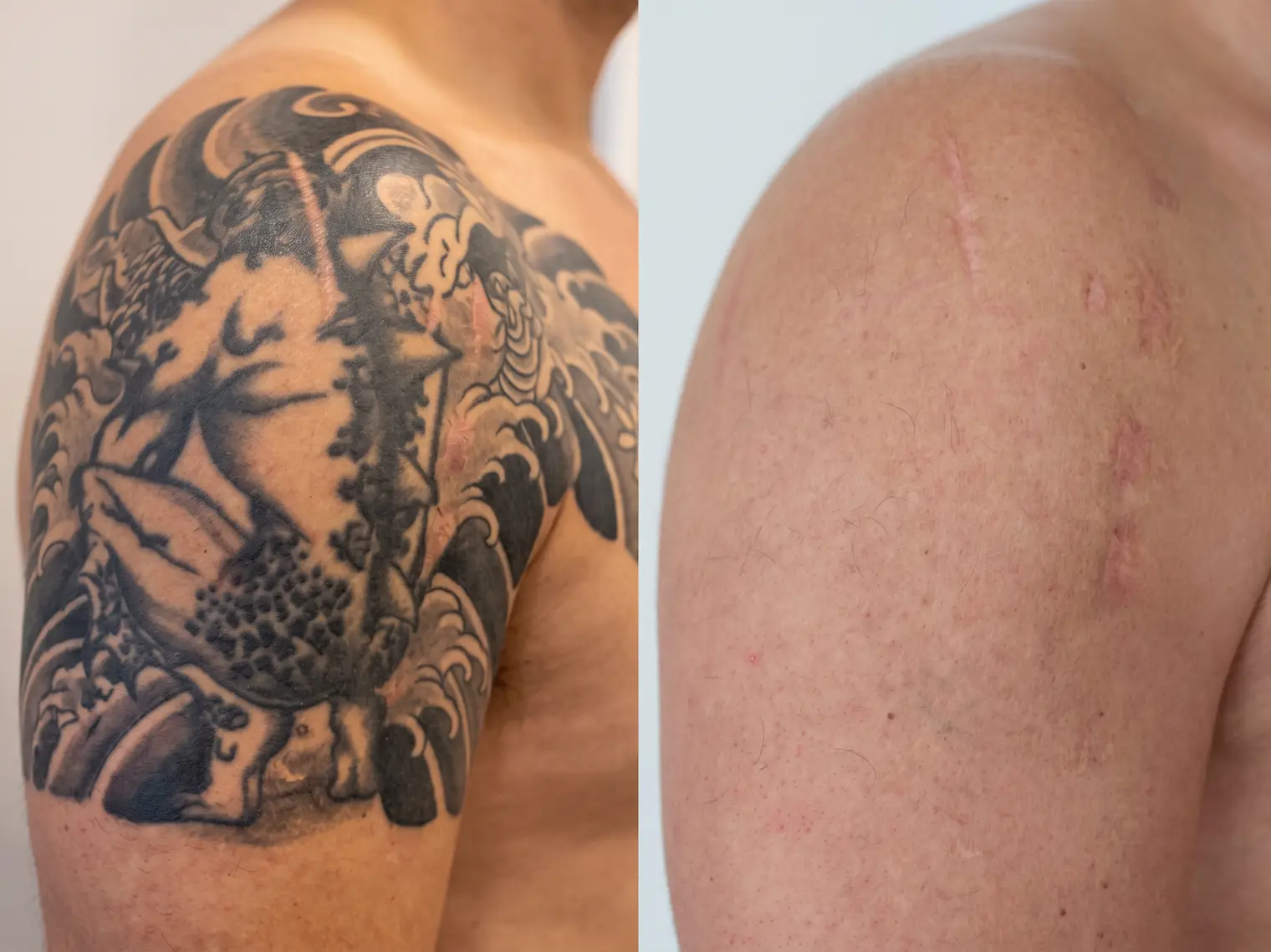
Portfolio examples like this help you judge an artist's real range.
Not every talented tattoo artist is equally skilled at cover-up work specifically. It is a distinct discipline that requires understanding how to use shadow, negative space, and strategic color placement to visually neutralize an existing design rather than simply drawing something new on top of it. When you are researching Nashville artists for a cover-up, ask specifically to see a portfolio of cover-up work, not just their general tattooing, since the two skill sets do not always overlap as much as people assume.
A strong cover-up portfolio will typically show the original tattoo alongside the finished piece, which tells you two important things: how confident the artist is in their own work, and how ambitious a transformation they are capable of pulling off. If an artist is reluctant to show before-and-after examples, that is worth asking about directly before you book.
It is also worth having a frank conversation about size. A common mistake is assuming a cover-up can stay roughly the same size as the original tattoo. In practice, most successful cover-ups end up meaningfully larger than what they are covering, since the new design needs enough visual weight and detail to draw the eye away from the ghost of the old linework underneath.
What This Decision Actually Costs
Beyond the removal sessions themselves, it helps to think about total cost across both paths before committing. Full removal alone, at the ranges covered in our cost guide, can run anywhere from several hundred to several thousand dollars depending on size and ink density, with no new tattoo included in that price. A cover-up path typically means a smaller removal spend on fading sessions, plus the cost of the new tattoo itself, which for a larger, more detailed cover-up piece can range from a few hundred to well over a thousand dollars depending on the artist and design complexity.
Run both numbers before deciding. For a lot of people, the combined cost of light fading plus a well-designed cover-up ends up lower than full removal alone, in addition to being faster and leaving them with new art they actually chose, rather than just blank skin.
Timing matters too, and it is worth planning for more than you might expect. Skin needs a genuine healing window between the final fading session and the new tattoo, usually a minimum of 6 to 8 weeks, sometimes longer depending on how the treated area responded. Rushing a cover-up onto skin that has not fully recovered from laser treatment increases the risk of poor ink saturation and uneven healing in the new piece, so building that buffer into your timeline from the start saves you from a frustrating redo later.
Not Sure Which Nashville Clinic Is Worth Your Money?
Tell us about your tattoo and your goals, and we will point you to clinics and artists who can help either way.
Thanks! We will match you with the right clinic shortly.
✓
Reviewed by a tattoo artist with over 10 years of industry experience, who has watched laser removal technology and technique improve dramatically over the past decade and regularly advises clients on full removal versus partial fading for a cover-up.
Frequently Asked Questions
Can any tattoo be covered up without removal first?
Many can, especially with an experienced artist willing to design around the existing piece. Dense, dark, or oddly placed tattoos benefit most from some fading first.
How many removal sessions does fading for a cover-up usually take?
Typically 2 to 5 sessions, compared to 6 to 15 or more for full clearance. Your specific number depends on the same factors covered in our session guide.
Should I pick the cover-up artist or the removal clinic first?
Talk to the cover-up artist first if possible. They can tell you what level of fading their design needs, which gives the removal technician a clear target instead of defaulting to full clearance.
Is a cover-up over faded ink safe?
Yes, as long as the skin has fully healed between the last removal session and the new tattoo, which is typically 6 to 8 weeks. A reputable artist will confirm your skin is ready before proceeding.
What if I change my mind partway through fading?
That is one advantage of this approach. Since you are not committed to full removal, you can stop fading sessions once you and your cover-up artist agree the piece is ready, or continue toward full clearance if you decide against a cover-up after all. Nothing about this path locks you into a single outcome ahead of time.
Can a tattoo on a scar be covered up safely?
It depends on the scar's texture and how it heals. Raised or textured scar tissue can affect how ink sits, so an experienced cover-up artist should assess the specific scar before committing to a design.
Can white ink tattoos be faded for a cover-up?
White ink is one of the more resistant colors to laser treatment and can be difficult to fade predictably. A skilled cover-up artist may need to design around it rather than relying on fading to remove it first.
Are cover-ups riskier on visible areas like the neck or hands?
The tattooing itself is not inherently riskier, but visible areas tend to show any inconsistency in the final result more clearly, so choosing an artist experienced specifically in that body location matters more.