Not every removal laser works the same way. Here is what actually separates picosecond technology like PicoSure from older Q-switched lasers, and which one is right for your ink.
10 min read·Last Updated: July 17, 2026
⚡ Quick Answer
PicoSure and other picosecond lasers deliver energy in trillionths of a second, shattering ink into smaller particles than older nanosecond Q-switched lasers, which can mean fewer sessions for some tattoos, especially resistant colors like blue and green. Traditional Q-switched lasers remain highly effective for black ink and are more widely available at a lower per-session cost.
The equipment behind the treatment matters more than most people realize.
Most people researching tattoo removal focus entirely on sessions, cost, and pain, and rarely ask what equipment a clinic is actually using. That is a reasonable blind spot, since laser technology sounds like a technical detail best left to the professionals. But the type of laser your clinic uses affects your results, your session count, and in some cases your total cost, which makes it worth understanding at a basic level before you commit to a clinic.
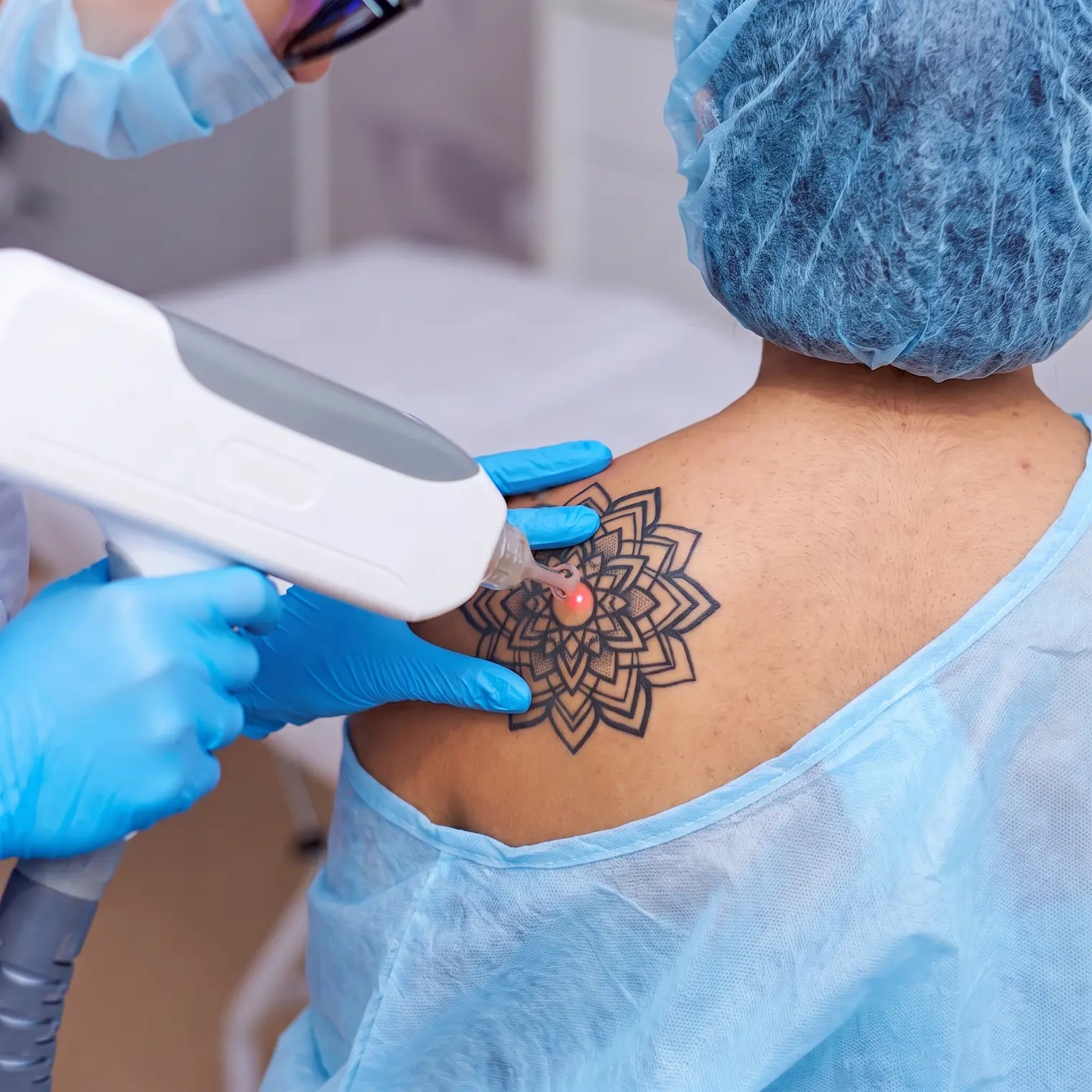
The two main categories you will encounter in Nashville are traditional Q-switched lasers, the long-standing industry standard, and newer picosecond lasers like PicoSure, Cynosure's proprietary system that pioneered this faster technology in aesthetic treatment. Neither is universally "better." Each has genuine strengths, and the right choice depends heavily on your specific tattoo.
"Clients ask me all the time whether the newer machine is just marketing. It's not, but it's also not magic. It's a real tool that's better suited to some tattoos than others."
A Nashville laser removal technician
Get Our Recommended Nashville Clinics
Submit your details and receive our trusted recommendations for tattoo removal in Nashville.
Both technologies work. The difference is in the details.
Traditional Q-switched lasers deliver energy pulses measured in nanoseconds, billionths of a second. This has been the industry standard for decades and remains highly effective, particularly for black and dark ink, which responds well to this pulse duration.
Picosecond lasers like PicoSure deliver pulses measured in trillionths of a second, roughly a thousand times faster than nanosecond technology. This shorter pulse duration shatters ink into smaller particles using a photomechanical effect rather than relying primarily on heat, which can mean less thermal damage to surrounding skin and, for certain stubborn colors, more effective breakdown of ink that has resisted traditional treatment.
The core idea behind both technologies is the same: shatter ink into particles small enough for your immune system to carry away naturally. The difference is in how effectively each pulse duration accomplishes that shattering, and how much heat is generated in the process.
Q-switched lasers rely more heavily on a photothermal effect, using heat to break down ink, which works very well for many tattoos but can sometimes leave larger ink fragments behind after each pass, particularly with certain resistant colors. Picosecond technology's faster pulse relies more on mechanical shattering than heat, which proponents argue produces smaller, more uniformly sized ink fragments that clear more efficiently through the lymphatic system, especially on ink that has proven resistant to traditional treatment.
Traditional Q-Switched Works Well For...
Black and dark ink, the most common tattoo color
Clients prioritizing lower per-session cost
Standard tattoos without unusually resistant colors
Clinics where this is the only technology available
Picosecond Lasers Often Help With...
Stubborn colors like green, blue, and some blacks that plateaued on Q-switched
Tattoos that stopped responding well to traditional treatment
Clients hoping to reduce total session count where budget allows
Some cases of amateur or heavily layered ink
For a lot of tattoos, especially straightforward black ink pieces, the difference in total sessions between the two technologies is modest. Where picosecond technology tends to show a clearer advantage is with colors that traditional lasers historically struggle with, and with tattoos that have plateaued partway through a treatment plan on Q-switched equipment, as covered in our session guide.
It is worth asking a prospective clinic directly which technology they would use for your specific ink, and why. A clinic confident in their equipment choice should be able to explain, in plain terms, why they are recommending one over the other for your particular tattoo rather than defaulting to whatever they happen to own.
Pulse Duration
Nanoseconds (Q-switched) vs trillionths of a second, picoseconds (PicoSure and similar devices).
Best For Black Ink
Both technologies handle black well. Q-switched remains the reliable, widely available standard.
Best For Resistant Colors
Picosecond lasers often show an advantage on stubborn greens, blues, and plateaued treatments.
Cost Difference
Picosecond treatments sometimes carry a modest per-session premium due to equipment cost.
Availability in Nashville
Q-switched lasers are more widely available. Ask specifically if a clinic offers picosecond technology.
Not a Universal Upgrade
Newer is not automatically better for every tattoo. The right choice depends on your specific ink.
Myth
PicoSure will always remove your tattoo faster than a traditional laser.
Fact
For straightforward black ink, results between the two technologies are often comparable. The advantage is most clear on resistant colors and previously stalled treatments.
Myth
If a clinic doesn't have a picosecond laser, they can't do a good job.
Fact
Traditional Q-switched lasers remain a proven, effective standard used successfully for decades. The technician's skill and settings matter as much as the specific device.
Bringing up laser technology at a consultation can feel intimidating if you are not familiar with the terminology, but a simple, direct question works fine. Something like "what type of laser would you use for my tattoo, and why" gives an experienced technician plenty of room to explain their reasoning without requiring you to already know the technical details covered here.
Pay attention to how specific the answer is. A technician who can explain why a particular technology suits your ink colors and depth is demonstrating real expertise. A vague answer, or one that dismisses the question entirely, is worth noting as you compare clinics, even if the rest of the consultation felt otherwise solid.
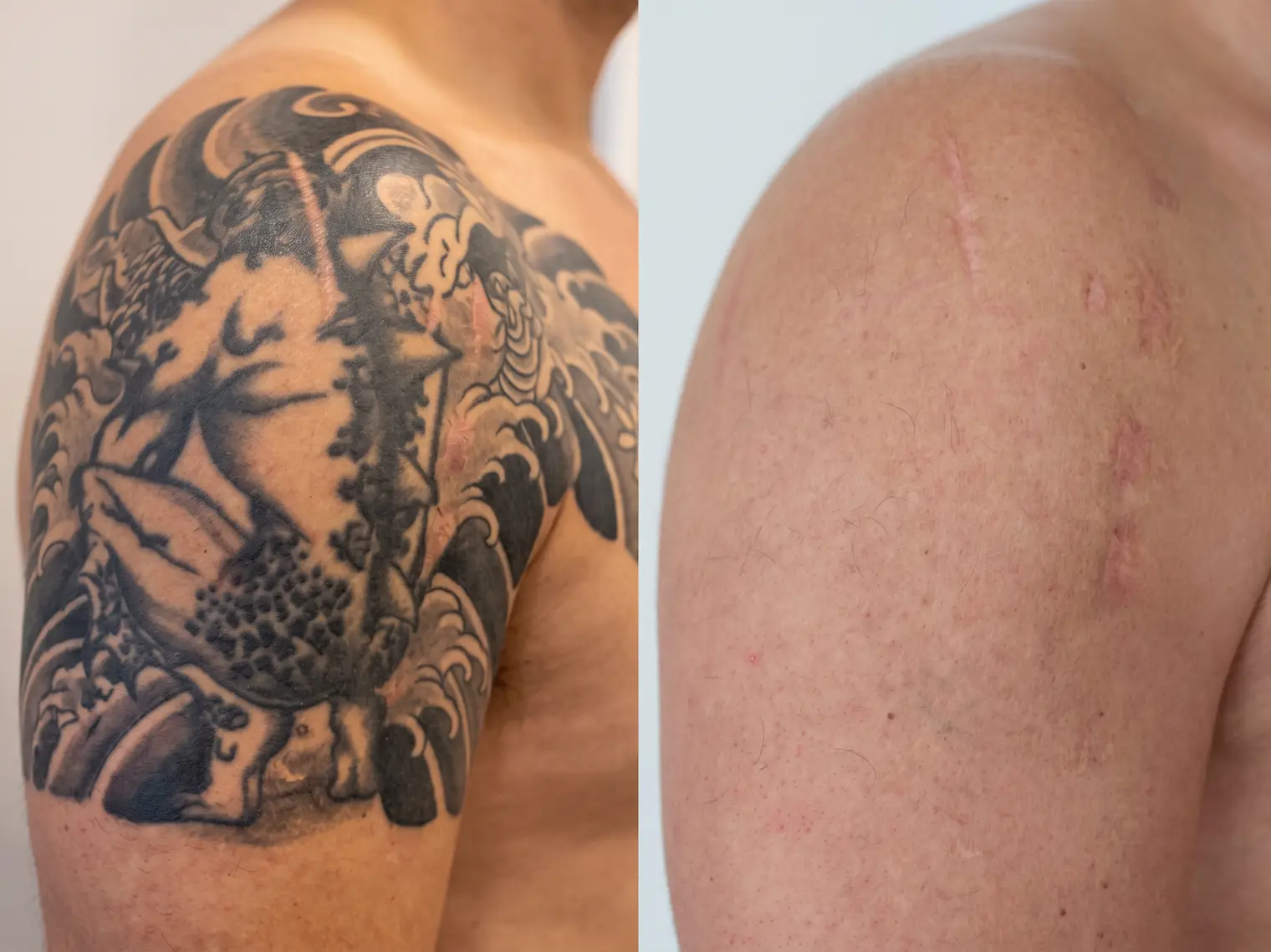
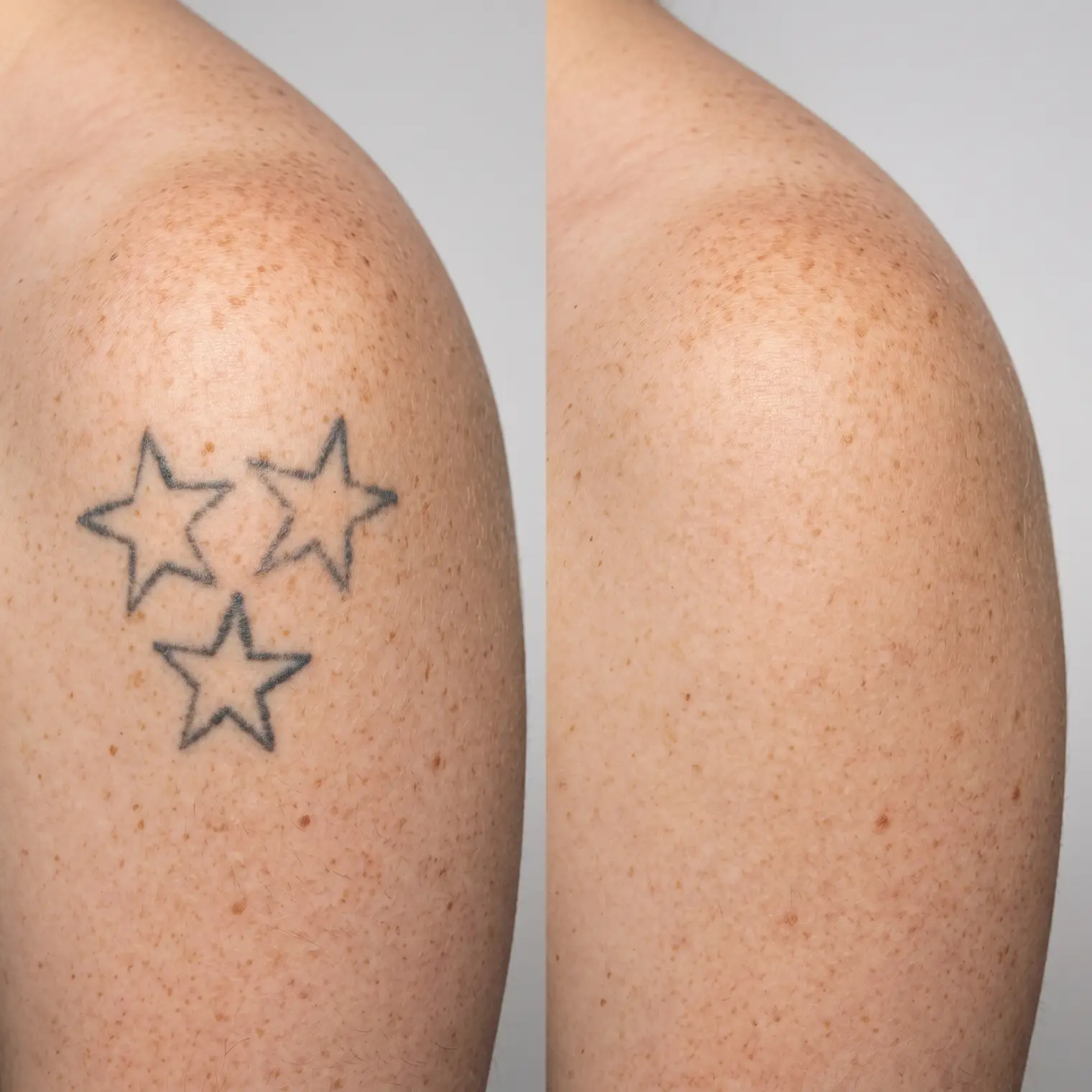
Either technology can reach this result with the right approach for your ink.
For most people with a straightforward black or dark ink tattoo, the technology question matters less than other factors like technician experience and clinic reputation. Q-switched lasers have a long, proven track record on exactly this type of ink, and there is no strong reason to seek out picosecond technology specifically if that describes your tattoo.
The calculation changes if you have colored ink, particularly greens or blues that traditional lasers historically struggle with, or if you have already been through several sessions on Q-switched equipment with disappointing results. In either case, it is worth specifically seeking out a Nashville clinic offering picosecond technology and asking whether switching, or starting with, that approach makes sense for your specific situation.
Picosecond devices are more expensive for clinics to purchase and maintain than traditional Q-switched lasers, and that cost sometimes shows up as a modest per-session premium passed on to clients. It is not universal, and some clinics price both technologies the same, but it is worth asking directly rather than assuming.
Whether that premium is worth paying depends entirely on your specific tattoo. For a straightforward black ink piece responding well to Q-switched treatment, there may be little practical benefit to paying more for picosecond technology. For a tattoo with resistant colors or one that has plateaued on traditional treatment, the potential for fewer total sessions can offset a higher per-session cost, sometimes resulting in a lower total spend even at a premium rate, using the same logic covered in our cost guide.
✓
Reviewed by a tattoo artist with over 10 years of industry experience, who has watched laser removal technology and technique improve dramatically over the past decade and regularly advises clients on full removal versus partial fading for a cover-up.
Not Sure Which Nashville Clinic Is Worth Your Money?
Tell us about your tattoo and we will point you to clinics using the right technology for your ink.
Thanks! We will match you with the right clinic shortly.
Is PicoSure the only picosecond laser brand?
No, PicoSure is one well-known brand, but other manufacturers make picosecond devices too. The underlying technology category matters more than the specific brand name.
Does picosecond treatment hurt more or less than traditional Q-switched?
Reported comfort levels are generally similar between the two, though individual experience varies. Neither technology is consistently reported as significantly more or less painful.
Can I switch from Q-switched to picosecond partway through treatment?
Yes, and this is a common approach when a tattoo has plateaued on traditional treatment. Discuss this option with your clinic if progress has slowed significantly.
Do all Nashville clinics offer picosecond lasers?
No, availability varies. Ask directly during your consultation, as covered in our consultation guide, rather than assuming a clinic has this equipment.
Is picosecond technology safer for darker skin tones?
Some picosecond devices offer settings that may reduce pigment-related risk on darker skin, but this depends on the specific device and technician expertise. Discuss your skin tone directly with your clinic regardless of which technology they use.
Does insurance or financing differ based on which laser is used?
No, coverage and financing options are generally based on the clinic and treatment plan itself, not the specific laser technology used, though total cost may vary slightly by technology as covered in our cost guide.