Yes, you can tattoo over skin that has been through laser removal. Getting a good result depends almost entirely on timing and honesty about what condition the skin is actually in.
10 min read·Last Updated: July 18, 2026
⚡ Quick Answer
Yes, you can get a new tattoo on skin that has been through laser removal. Most experts recommend waiting at least 8 to 12 weeks after your final session to let the skin fully heal. True scarring is uncommon with modern laser technology, under 5 percent by most estimates, but texture and pigment changes can occur. Choosing an artist experienced with previously treated skin, and being patient with timing, both meaningfully improve your results.
Patience with timing matters more than almost anything else here.
A lot of people pursuing removal are not aiming for permanently bare skin; they want a fresh start for a new design. That raises a natural question: once the laser work is done, or mostly done, is the skin actually ready to be tattooed again, and does it behave the same way as skin that has never been treated?
The short answer is yes, you can tattoo over previously lasered skin, but getting a good result depends heavily on patience with timing and honesty about the skin's actual condition, rather than rushing into a new design the moment the old one looks faint enough.
"Rushing the process can increase the risk of complications, such as scarring, uneven ink distribution, or prolonged healing. Timing is crucial when considering a new tattoo after laser removal."
Common guidance from removal and tattoo professionals
Get Your Timeline Right the First Time
A Nashville clinic can assess your healing and tell you honestly when your skin is ready.
A fully healed base gives a new tattoo its best chance.
Most experts recommend waiting a minimum of 8 to 12 weeks after your final laser session before booking a new tattoo in that area, giving the skin real time to regenerate and settle into a stable, suitable canvas. Some sources suggest going even longer for larger areas or after a more extensive removal course, since more heavily treated skin generally needs more time to fully stabilize.
This waiting period is not arbitrary. Tattooing over skin that is still actively healing meaningfully increases the risk of infection, poor ink retention, and complications that could have been avoided with a bit more patience. If you are unsure whether your skin has fully healed, a quick check-in with your removal clinic before booking new work is a reasonable step.
8-12 Week Minimum
The standard recommended wait after your final laser session before new tattooing begins.
Under 5% Scarring Risk
With modern technology and proper aftercare, true scarring from removal is relatively uncommon.
Texture & Pigment Changes
Some clients notice subtle differences in skin texture or color, worth assessing before new ink.
Experienced Artist Matters
Choosing someone familiar with tattooing over treated or scarred skin improves your odds of a clean result.
Weeks 1-8
Active Healing
Skin still stabilizing; too early for new tattooing in most cases
Weeks 8-12
Minimum Window
Standard recommended earliest point for new work
3+ Months
Extra Margin
Often preferred for larger areas or more extensive removal courses
It can be tempting to book a new tattoo the moment the old design looks faded enough to work with, especially after months of removal sessions. But visible fading and complete skin healing are two different things happening on different timelines. The surface may look ready weeks before the deeper layers of skin have fully stabilized and regained their normal structure and elasticity.
Tattooing into skin that has not finished this deeper healing process increases the risk of poor ink retention, uneven color, and in some cases infection, none of which are easy to fix once a new tattoo is already underway. The extra weeks of patience pay off in the quality of the final result.
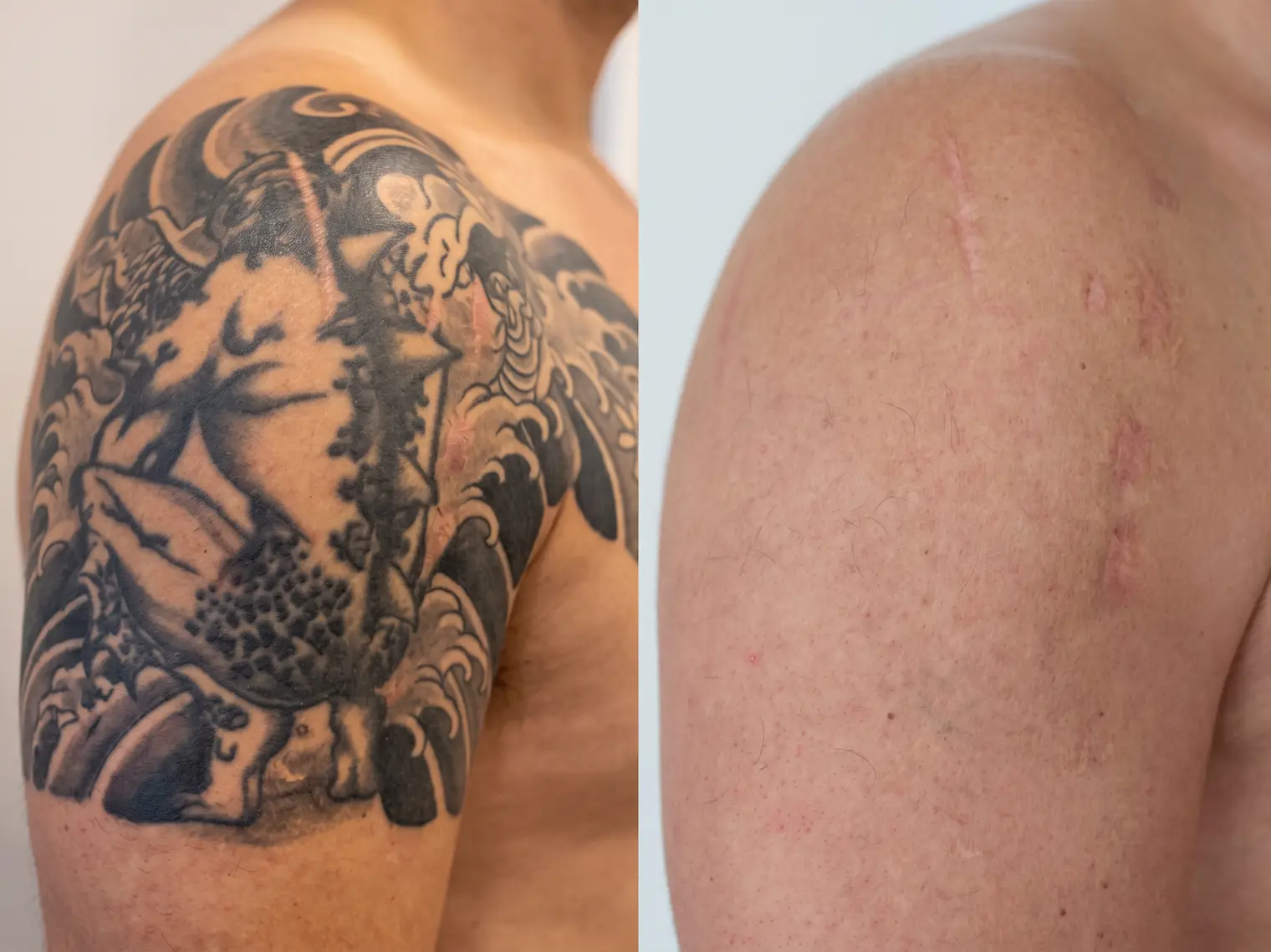
Laser-treated skin does not always look and feel exactly like it did before the original tattoo. Temporary sensitivity and tenderness are common in the weeks after treatment. Less commonly, some clients notice lasting texture changes or pigment shifts, hypopigmentation, where the skin ends up lighter than surrounding areas, or hyperpigmentation, where it ends up darker, particularly in people with darker skin tones.
True scarring, meaning raised, indented, or otherwise structurally different skin, is relatively uncommon with modern picosecond and Q-switched laser technology when treatment and aftercare are handled properly. Industry estimates put that risk at under 5 percent, and most cases that do occur trace back to older equipment, overly aggressive settings, or aftercare mistakes like picking at healing skin.
Myth
You can't get a new tattoo on skin that has been through laser removal.
Fact
You can. The key factors are waiting long enough for full healing and choosing an artist comfortable working on previously treated skin.
Myth
As soon as the old tattoo looks faded enough, you can start the new one.
Fact
Visible fading and full skin healing are not the same thing. Most experts recommend a minimum 8 to 12 week wait after your last session regardless of how faded the tattoo looks.
Myth
Laser removal always leaves some kind of visible scarring behind.
Fact
True scarring is relatively uncommon with modern technology and proper aftercare, generally estimated at under 5 percent of cases.
Planning New Ink After Removal?
Tell us about your tattoo and timeline, and we will point you to a Nashville clinic that can help you plan it right.
Thanks! We will match you with the right clinic shortly.
Not every tattoo artist has experience working on skin that has been through laser removal, and that experience matters. Ink can settle differently on skin with subtle texture changes compared to skin that has never been tattooed or lasered, and an artist unfamiliar with that difference may get less predictable results than one who works with this kind of skin regularly.
It is worth asking a prospective artist directly whether they have experience tattooing over removed or faded tattoos, and being upfront with them about your specific removal history, including how many sessions you had and how the skin has healed since. That context helps them plan a design and technique suited to what your skin can actually support.
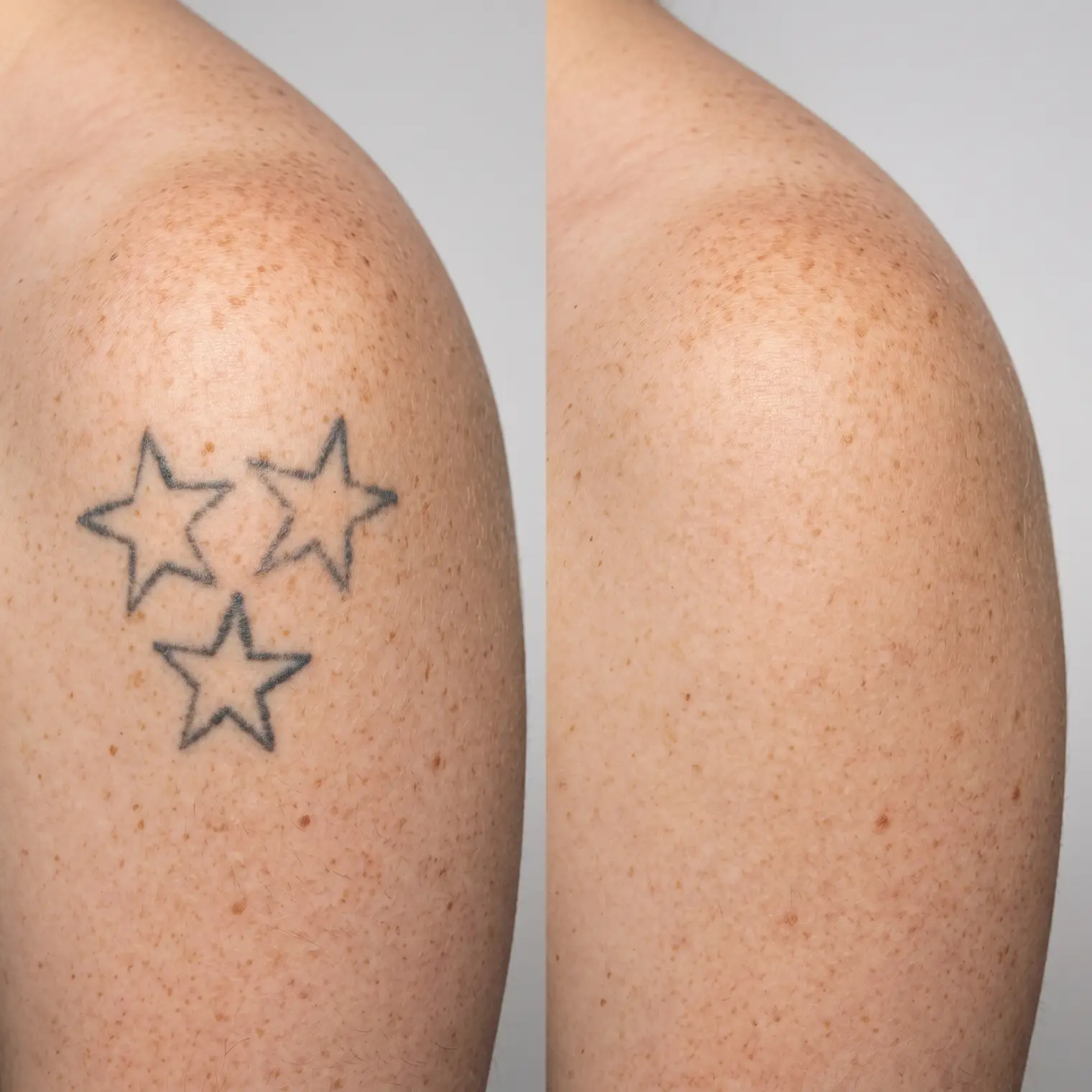
Fully cleared skin gives an artist the most open canvas to work with.
If your removal was aimed at fading rather than full clearance, some pigment from the original tattoo may still be faintly present under the new design. This is not automatically a problem, since a skilled artist can often plan a new design specifically around residual color or shading, using it as part of the composition rather than fighting against it.
Being transparent with your new artist about exactly how much fading was achieved, and sharing photos from throughout your removal process if you have them, gives them the clearest possible picture to design around, rather than discovering unexpected remaining ink partway through the new tattoo.
✓
Reviewed by a tattoo artist with over 10 years of industry experience, who regularly works with clients transitioning from laser removal into a brand new design.
How long should I wait after laser removal before getting a new tattoo?
Most experts recommend a minimum of 8 to 12 weeks after your final laser session, though some sources suggest waiting even longer for larger or more heavily treated areas to allow full healing.
Can laser removal leave scarring that affects a new tattoo?
It is possible but relatively uncommon with modern laser technology and proper aftercare. Industry estimates put the risk of true scarring at under 5 percent when treatment and healing are handled correctly.
Will my skin look and feel the same after removal, ready for new ink?
Not always exactly the same. Treated skin can show temporary or, less commonly, lasting changes in texture or pigmentation, which is why a new tattoo artist needs to assess it directly before starting work.
Do I need a specific type of tattoo artist for work on removed skin?
It helps to choose an artist with direct experience tattooing over previously treated or scarred skin, since ink can settle differently on that surface than on skin that has never been tattooed or lasered.
Can residual ink from the old tattoo show through the new design?
If the area was only partially faded rather than fully cleared, some remaining pigment can be visible, which is why the new design is often planned specifically around any residual color or shading.
Does darker skin need any special consideration for removal-then-tattoo timelines?
Yes. Darker skin tones are more prone to visible hypopigmentation or hyperpigmentation after laser treatment, so extra care in technology choice and healing time is often recommended before proceeding to a new tattoo.
What happens if I rush and get tattooed too soon after removal?
Tattooing over unhealed skin increases the risk of infection, uneven ink retention, and scarring, and can produce a worse final result than simply waiting the recommended healing period before booking your new session.