← Back to Removal Guide Hub
Tattoo Removal Guide · Nashville
Why Cheap Clinics Exist
A lower session price is not automatically a red flag, but it almost always reflects something specific: older equipment, a different business model, or less experienced hands. Here is how to tell which one you're looking at.
10 min read
·
Last Updated: July 18, 2026
⚡ Quick Answer
Removal prices vary because professional lasers cost clinics $100,000 to $300,000, with newer picosecond systems priced above older Q-switched machines, plus ongoing maintenance, technician training, and location overhead. A meaningfully below-market price often reflects one of these being cut somewhere. Watch for guaranteed-removal language and a consultation that pushes the highest package before actually examining your tattoo; ask directly what laser technology and experience level you're paying for.
Before you go further, our guides on What Removal Actually Costs in Nashville and Affirm vs Klarna vs In-House Financing cover the questions that usually come up next.
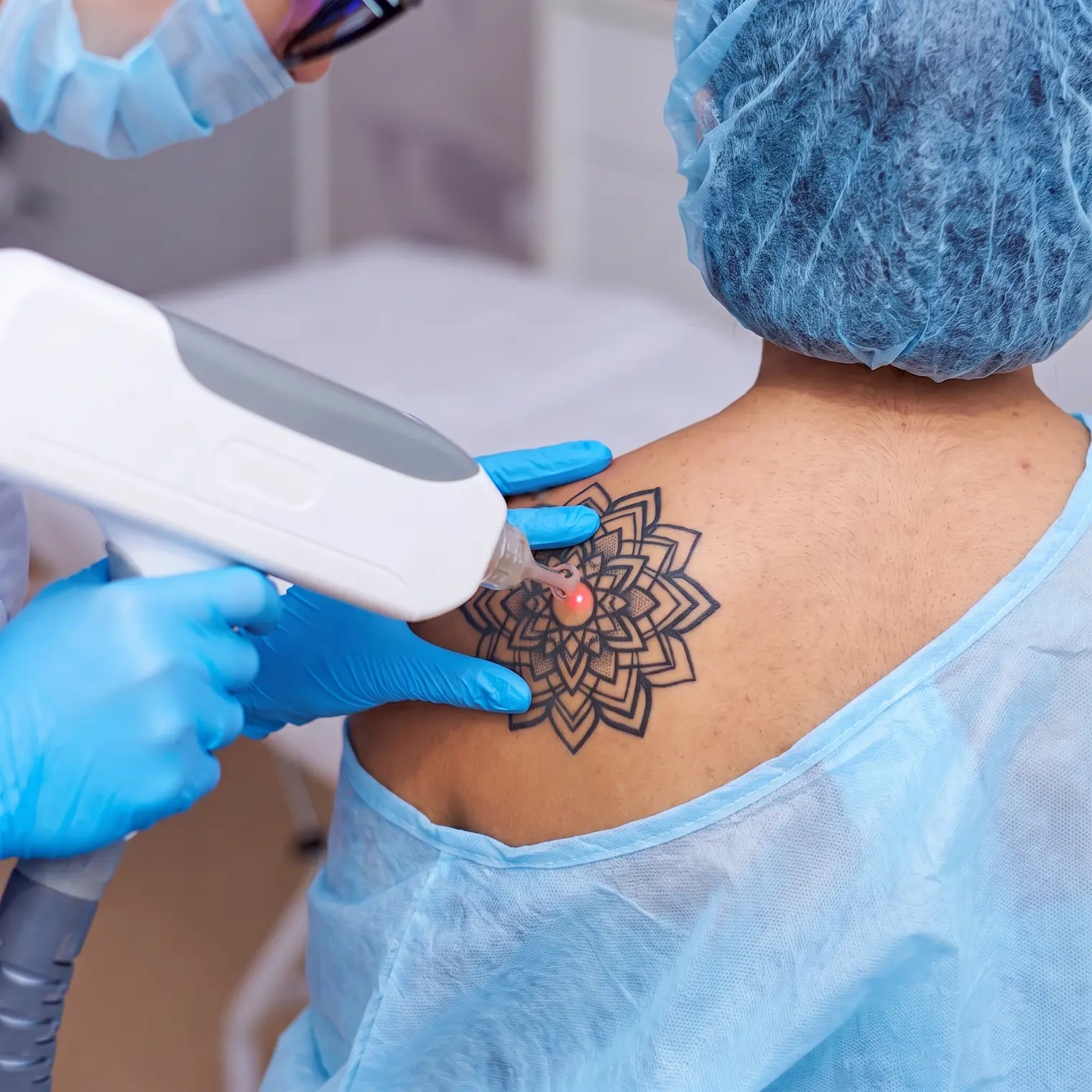
Equipment cost is one of the biggest drivers behind price differences.
It is natural to wonder why one clinic quotes $200 a session and another quotes $500 for what looks like the same treatment on paper. The honest answer is that "laser tattoo removal" covers a real range of equipment, expertise, and business models, and the price tag usually reflects a genuine difference somewhere in that chain, not just arbitrary markup dressed up as a premium service.
Understanding what actually drives the cost gives you a much better basis for comparing clinics than price alone, and helps you spot the difference between a legitimately affordable option and one where something important is being cut to hit a lower number.
"You're not just paying for flashes from a laser. You're paying for the technology, judgment, and treatment planning that protects your skin while moving you toward your goal."
Common framing used by removal specialists explaining cost differences
Compare Real Nashville Clinics, Not Just Prices
Get matched with clinics so you can compare technology, experience, and total cost side by side.
Get My Recommendations →
The Equipment Behind the Price
Professional tattoo removal lasers are a serious capital investment. Q-switched lasers, an older but still widely used technology, can cost a clinic anywhere from $100,000 to $300,000, and newer picosecond systems are typically priced even higher than that range. On top of the purchase price, clinics pay ongoing costs to maintain and calibrate that equipment, which industry estimates put at roughly 10 to 20 percent of the machine's value per year, a recurring cost that has to be factored into every session price a clinic sets.
That overhead has to be reflected somewhere in a clinic's pricing structure. A clinic charging noticeably less than the local average is either operating with lower overhead in some legitimate way, such as a lower-cost location outside a major metro area, or is cutting into one of these cost centers instead: older or less-maintained equipment, less experienced staff, or a thinner margin that may show up elsewhere in the business, like aggressive upselling during your consultation.
What Older Technology Actually Means
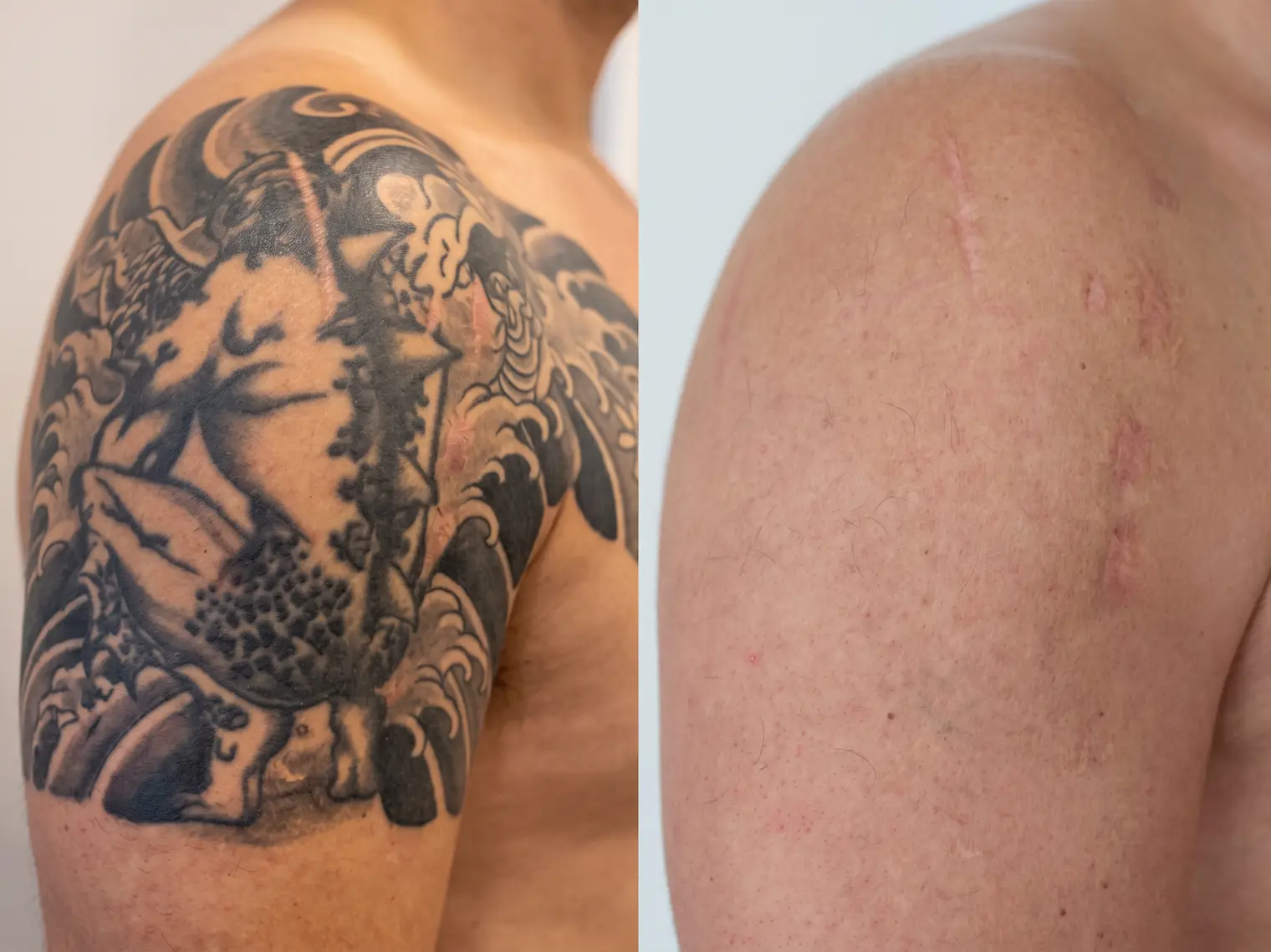
Technology matters more as ink color and density get more complex.
An older Q-switched laser is not automatically a dealbreaker for your specific tattoo. It can still treat many tattoos reasonably well, particularly simpler designs done in solid black ink with minimal shading. Where the gap widens is with more resistant colors, denser or layered ink, and certain skin tones, where a newer picosecond system's ability to break ink into smaller fragments more efficiently tends to translate into fewer sessions and noticeably better overall clearance by the end of a treatment course.
This is why a flat, one-size-fits-all price comparison across clinics rarely tells the full story. The better question is not simply which clinic is cheapest, but whether a specific clinic's technology is well suited to your specific tattoo, which is something a real consultation, not just a price list, is meant to answer.
Equipment Cost
Professional lasers run $100,000 to $300,000, with ongoing maintenance adding real annual overhead.
Technician Experience
Judgment on laser settings for your specific skin and ink meaningfully affects both safety and results.
Location Overhead
Urban clinics with higher rent and stricter regulatory requirements often charge more than rural ones.
Laser Generation
Newer picosecond systems typically cost more but can clear stubborn ink in fewer sessions than older machines.
Business Model
Some lower prices reflect genuine efficiency; others reflect a plan to make margin back through upselling.
Package Structure
Per-session, package, and unlimited-treatment pricing models can make direct price comparison tricky without a written quote.
Regional Price Patterns Worth Knowing
Location affects pricing in ways unrelated to quality. Clinics in larger metropolitan areas typically face higher rent and stricter regulatory requirements around operating laser equipment, which shows up in session pricing regardless of how good the clinic actually is. Smaller cities and rural areas often charge less partly for these overhead reasons, not necessarily because the treatment itself is worse.
That said, rural areas sometimes also have less access to the newest laser technology simply because the client volume needed to justify a picosecond system's cost is harder to reach outside a larger market. For tattoos with stubborn colors or dense ink, some clients find it worth traveling to a larger city specifically for access to more advanced equipment, since the reduction in total sessions needed can offset the added travel cost over a full treatment course.
Lower Overhead
Smaller Cities
Often lower cost, sometimes less access to newest tech
Higher Overhead
Major Metro Areas
Stricter regulations and rent typically push prices up
Worth Comparing
Nashville Clinics
A real consultation beats a price list for comparing options
Red Flags Worth Watching For
A few patterns are common enough across the industry that they are worth learning to spot rather than dismissing as one-off bad luck. Language guaranteeing full removal is one of them; no laser tattoo removal outcome is guaranteed, since results depend on ink, skin type, device, technician skill, and individual immune response, and complete removal is never the automatic default outcome to expect, regardless of how confidently a clinic's marketing materials phrase it.
A consultation that pushes you toward the highest-tier package before the technician has actually examined your tattoo is another pattern worth noticing. A real consultation is the evaluation; the package decision should come after that assessment, not before it. Reluctance to clearly answer what specific laser technology a clinic uses is a third signal worth paying attention to, since a confident, transparent clinic generally has no reason to be vague about the equipment it is treating you with.
Myth
The cheapest clinic and the most expensive clinic will give you basically the same result.
Fact
Equipment generation and technician experience affect session count and outcome quality, especially for resistant colors or denser ink.
Myth
Paying more always guarantees a better result.
Fact
A higher price does not guarantee quality on its own. What matters is whether that price reflects real investment in equipment, training, and honest treatment planning.
Myth
A clinic offering a noticeably below-market price is always trying to scam you.
Fact
Sometimes a lower price reflects lower overhead, such as a location with lower rent. The right move is to ask direct questions rather than assume either way.
Want an Honest Comparison of Nashville Clinics?
Tell us about your tattoo, and we will point you to clinics worth comparing on more than just price.
Thanks! We will match you with the right clinic shortly.
Questions Worth Asking Directly
A short list of direct questions does more to protect you than trying to judge a clinic by price alone. Ask what specific laser technology they use for your tattoo's colors, how many years of hands-on experience the technician performing your treatment actually has, and whether the quoted price includes numbing options and aftercare products or bills them separately as add-ons once you have already committed to the plan.
It is also reasonable to ask for a written, personalized treatment plan based on an actual look at your tattoo, rather than accepting a generic price quoted over the phone before anyone has seen your skin. A clinic confident in its equipment and technique generally has no issue answering all of this clearly and in detail, and a clinic that seems evasive or rushes past these questions is worth treating with extra caution regardless of how attractive the advertised price looks on its own.
None of this means the cheapest option is automatically wrong for you, or that the most expensive clinic is automatically the best fit. The point is simply that price alone tells you very little on its own. Asking a few direct questions and getting a real, written quote based on your specific tattoo puts you in a far better position to judge value than comparing advertised session prices side by side.
✓
Reviewed by a tattoo artist with over 10 years of industry experience, who regularly helps clients weigh price against real quality signals before committing to a removal plan.
Frequently Asked Questions
Why do laser tattoo removal prices vary so much between clinics?
Equipment cost is a major factor. Professional lasers can cost a clinic $100,000 to $300,000, with newer picosecond systems priced higher than older Q-switched machines, plus ongoing maintenance and calibration. Technician experience, clinic location, and business model all factor in too.
Is a cheaper session price always a bad sign?
Not automatically, but it is worth understanding why the price is lower. A clinic in a lower-overhead location can reasonably charge less without cutting corners. A price that seems dramatically below the local range is worth asking direct questions about.
What does older laser technology actually mean for my results?
Older Q-switched lasers can still treat many tattoos reasonably well, especially simple dark ink. They tend to struggle more with resistant colors, dense ink, or certain skin tones compared to newer picosecond systems, which can mean more sessions or less complete clearance.
What red flags should I watch for when comparing clinics?
Guaranteed full removal language, a consultation that pushes you toward the highest-tier package before actually examining your tattoo, and reluctance to disclose what specific laser technology they use are all worth treating as caution signs.
Does a higher price always mean a better clinic?
Not necessarily, but investment in modern equipment, proper calibration, and experienced technicians does tend to correlate with fewer wasted sessions and lower complication risk, which can make a higher upfront price more cost-effective over a full treatment course.
What questions should I ask to evaluate a lower-priced clinic?
Ask what specific laser technology they use, how many years of experience the technician performing your treatment has, whether the quoted price includes numbing and aftercare products, and whether they offer a written, personalized treatment plan rather than a generic price.
Can outdated equipment actually cause harm, not just slower results?
Yes, in some cases. Laser settings need to be judged carefully for your specific skin tone and ink, and less experienced technicians or poorly calibrated equipment can increase the risk of burns, scarring, or pigment changes.
Is it worth traveling to a bigger city for a more advanced clinic?
It can be, particularly for stubborn colors or larger tattoos where a picosecond laser may clear ink in meaningfully fewer sessions than an older system, which sometimes offsets the added travel cost over the full treatment course.
Ready to Compare Clinics the Right Way?
Get matched with a Nashville clinic that will give you a transparent, honest look at your options.
Find a Trusted Removal Clinic