Removal is never a single appointment. It is a session-by-session process spread across months, and understanding the real shape of that timeline makes the whole process far less frustrating to live through.
10 min read·Last Updated: July 20, 2026
⚡ Quick Answer
Most tattoos need six to twelve sessions spaced six to eight weeks apart, which puts full clearance realistically at one to two years. Larger, denser, or more colorful tattoos run toward the longer end, and fading enough for a cover-up can often be reached in a fraction of that time. Picosecond laser technology, consistent aftercare, and a healthy healing response can shorten the timeline, while smoking, dense ink, and irregular session spacing tend to stretch it out.
Each session is one step in a much longer process, not the whole thing.
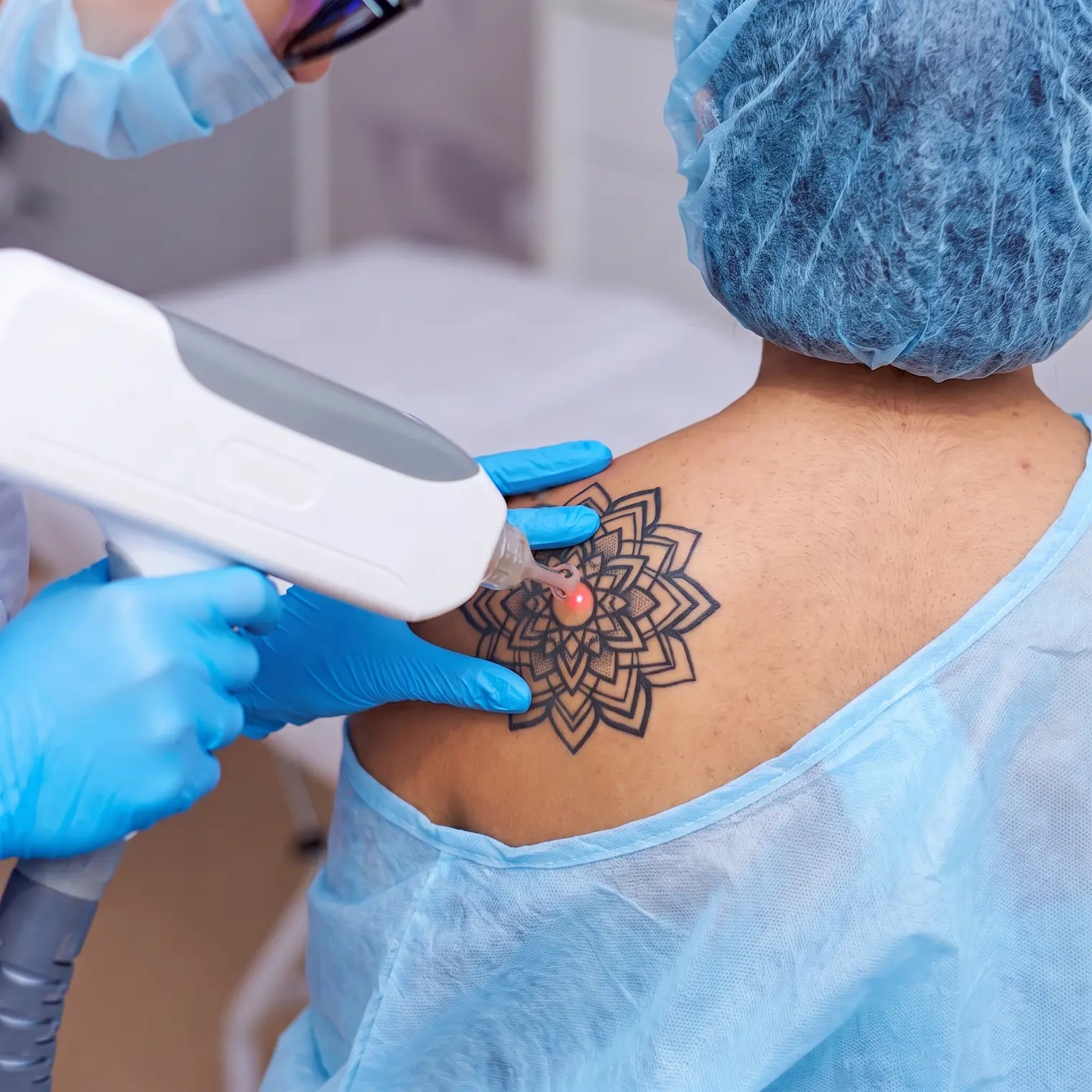
One of the most common surprises people run into with tattoo removal is simply how long the full process takes. A single session does not clear a tattoo, and it is not supposed to. Removal works in stages, with your body doing real work between appointments, which is why the calendar matters just as much as what happens during each session itself.
Knowing the realistic shape of the timeline before you start makes the whole process easier to commit to, and helps you plan around it instead of feeling discouraged by slow-looking progress along the way.
"People expect a few visits. The honest answer is closer to a year or two of spaced-out sessions, with real progress happening between appointments, not just during them."
Common explanation given during removal consultations
Get a Timeline Based on Your Actual Tattoo
A Nashville clinic can assess your specific tattoo and give you a real, honest session estimate.
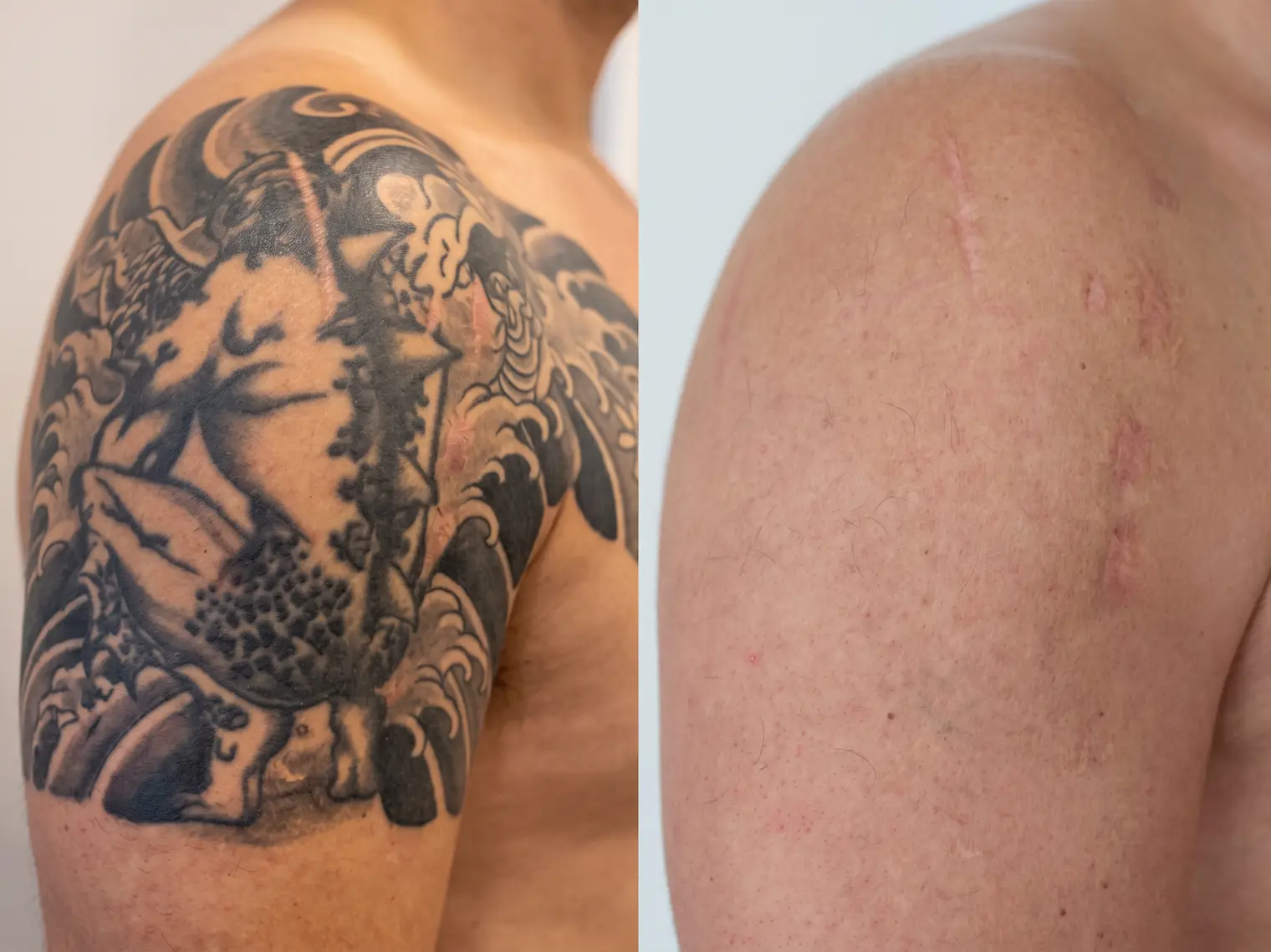
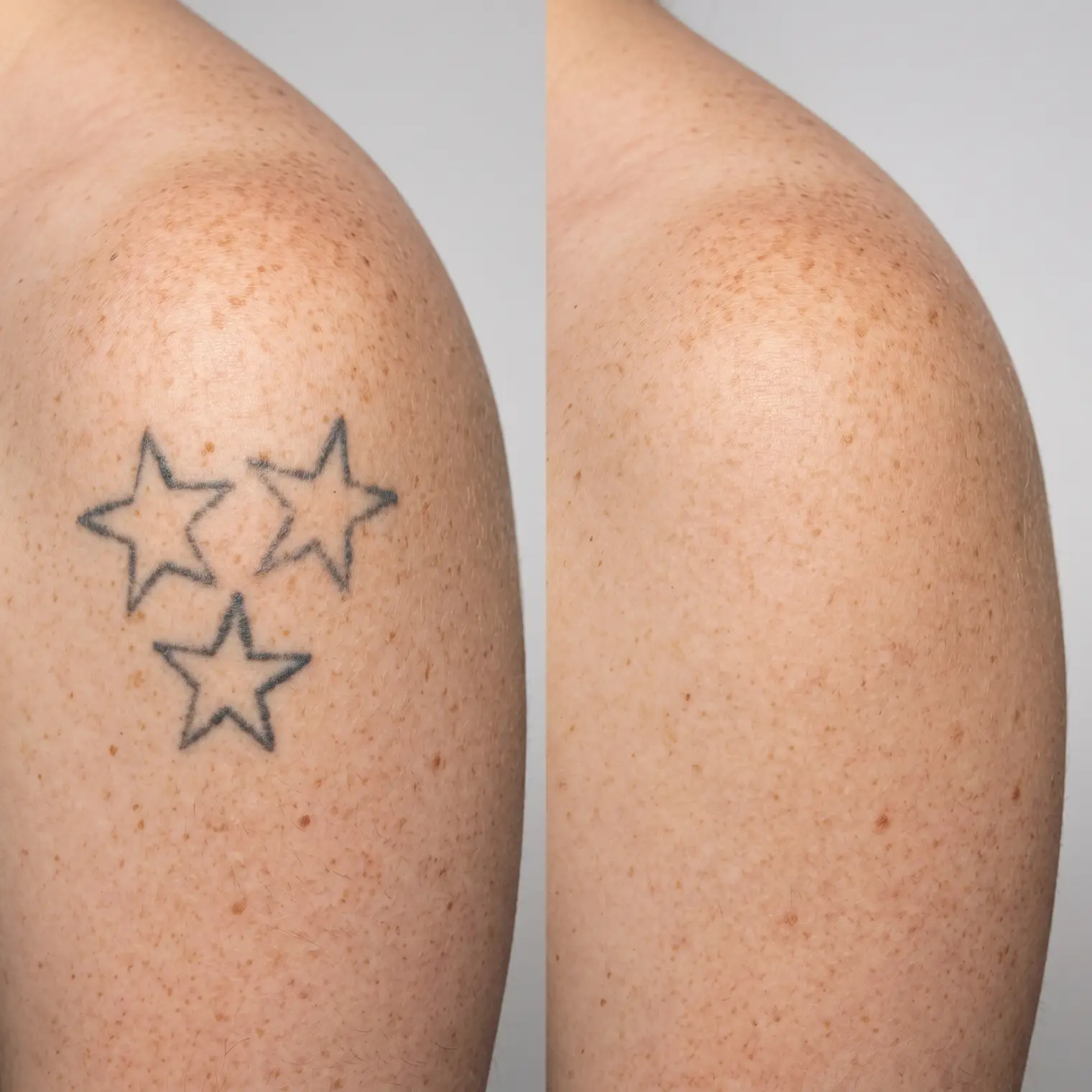
Visible fading builds gradually across the full course of sessions.
Most tattoos need somewhere between six and twelve sessions to reach full clearance, and each session is spaced roughly six to eight weeks from the last. Multiply that out and a straightforward removal realistically takes twelve to eighteen months from first session to last, with larger or denser pieces sometimes running closer to two years.
That pace is not a limitation of the equipment. It reflects how long your body needs to clear the broken-down ink particles between treatments, guided by the same healing process covered in our aftercare guide. Skipping ahead does not speed up results, it just increases the risk of skin damage without any real benefit to the timeline.
Sessions Needed
Most tattoos require six to twelve sessions total, though larger or denser pieces can run higher.
Time Between Sessions
Six to eight weeks is standard, giving your body time to clear ink between each treatment.
Total Timeline
Most full removals take one to two years from first session to last visible clearance.
Fading for Cover-Up
Fading enough to cover with new ink can often be reached in a fraction of the sessions full clearance needs.
Laser Technology
Newer picosecond systems can clear certain colors and dense ink more efficiently, sometimes shortening the timeline.
Your Healing Response
Circulation, immune response, smoking status, and aftercare consistency all affect how quickly sessions add up to results.
Why Sessions Are Spaced Weeks Apart
The six-to-eight-week gap between sessions is not arbitrary. After each treatment, your lymphatic system spends that window carrying away the broken-down ink particles the laser fragmented. Treating the same area again before that process finishes does not clear more ink, it simply adds risk of scarring or skin damage without moving the timeline forward.
This is also why a rushed removal timeline is usually a red flag rather than a good deal. A clinic offering to compress sessions closer together than that window is either not following standard safety practice or setting expectations that will not hold up once treatment begins.
What Actually Speeds Up or Slows Down Your Timeline
A tattoo's age can work in your favor here. Older tattoos have often already faded somewhat and had some ink naturally broken down by the body over the years, which can mean reaching full clearance in fewer sessions than an equivalent fresh tattoo of the same size and color. Newer picosecond lasers can also clear resistant colors and dense ink more efficiently than older Q-switched systems, occasionally shaving real time off the overall course of treatment.
On the other side, smoking measurably slows the timeline by constricting blood vessels and impairing the immune response your body relies on to clear ink. Inconsistent aftercare, skipped sessions, and areas with weaker circulation, like the lower leg, can all stretch the calendar out further than a straightforward case would otherwise take.
Myth
A few sessions should be enough to fully remove most tattoos.
Fact
Most tattoos need six to twelve sessions for full clearance. A handful of sessions typically produces partial fading, not a clear canvas.
Myth
Booking sessions closer together will get you clear skin faster.
Fact
Your body needs the full six-to-eight-week window to clear ink between sessions. Compressing the schedule adds risk without shortening the real timeline.
Myth
If a tattoo is not visibly lighter after one session, the treatment is not working.
Fact
Ink continues breaking down and clearing for weeks after a session. Progress is often more visible in photos taken before the next appointment than immediately after treatment.
Get a Realistic Timeline for Your Tattoo
Tell us about your tattoo, and we will point you to a Nashville clinic that can give you an honest session estimate.
Thanks! We will match you with the right clinic shortly.
Setting a Realistic End Date
Full clearance is the finish line, but visible fading arrives long before it.
It helps to think of the timeline in two parts rather than one long wait. Visible fading, often enough to plan a cover-up around, tends to show up well before the final sessions. Full clearance, where the tattoo is essentially gone, is the longer goal that most people are working toward across the full one-to-two-year course.
Planning around the realistic version of this timeline, rather than the version implied by a single dramatic before-and-after photo, makes the process far less frustrating. Watching for the real signs your removal is working, consistent aftercare between sessions, and giving your body the full window it needs between treatments are the things that actually keep you on pace.
Why a Real Consultation Beats Guessing
No general timeline can account for your specific tattoo's size, density, color, and placement all at once. This is exactly why generic timelines found online can only offer a rough range rather than a real answer tailored to your situation.
A real consultation, where a technician examines your tattoo directly, remains the only reliable way to get a session estimate you can actually plan around, and it typically costs nothing to find out. Bringing photos of your tattoo in good lighting, if you cannot make it in person right away, can also help a clinic give you a preliminary sense of the timeline before a full in-person assessment.
Taken together, session count sets the baseline, the six-to-eight-week spacing sets the pace, and your own healing response, aftercare, and consistency determine how smoothly that plan actually plays out across many months. None of these pieces work in isolation, which is exactly why an honest estimate from a real consultation is worth more than any general timeline you could work out on your own.
✓
Reviewed by a tattoo artist with over 10 years of industry experience, who regularly walks clients through exactly what goes into their specific removal quote.
Frequently Asked Questions
How long does full tattoo removal actually take from start to finish?
Most tattoos need somewhere between six and twelve sessions spaced six to eight weeks apart, which puts full clearance realistically between one and two years. Larger or denser tattoos can run longer, and some fading enough for a cover-up can be reached much sooner.
Why are removal sessions spaced so many weeks apart?
Your body needs that window to actually clear the broken-down ink particles through its lymphatic system after each session. Treating again too soon does not speed up clearance and increases the risk of skin damage.
Can anything make the timeline shorter?
Newer picosecond laser technology, a healthy immune and circulatory response, consistent aftercare, and a tattoo that is already somewhat faded can all reduce the total number of sessions needed.
What tends to slow the timeline down?
Dense, heavily saturated ink, stubborn colors like light blue and green, smoking, inconsistent aftercare, and skipping sessions or spacing them irregularly all tend to add time to the overall process.
Is the timeline the same for every part of the body?
Not exactly. Areas with strong circulation, like the chest or upper arm, often clear somewhat faster than areas with weaker circulation, like the lower leg or ankle, though the difference is usually a matter of sessions rather than years.
Do I need to complete every session to see results?
No. Visible fading typically builds session by session, so partial progress is normal and visible well before full clearance, which matters if your goal is fading for a cover-up rather than a completely clear canvas.
How do I get a realistic timeline for my specific tattoo?
A Nashville clinic can look at your tattoo's size, density, color, and placement directly and give you an honest session estimate, which is far more reliable than any general timeline you could estimate on your own.